- Ecosystem management
- Local development
- Beneficiary ASGN - Association de Sauvegarde Des Girafes du Niger
- Montant du projet € 96 500
- Subventions FFEM € 47 500
-
État du projet achevé
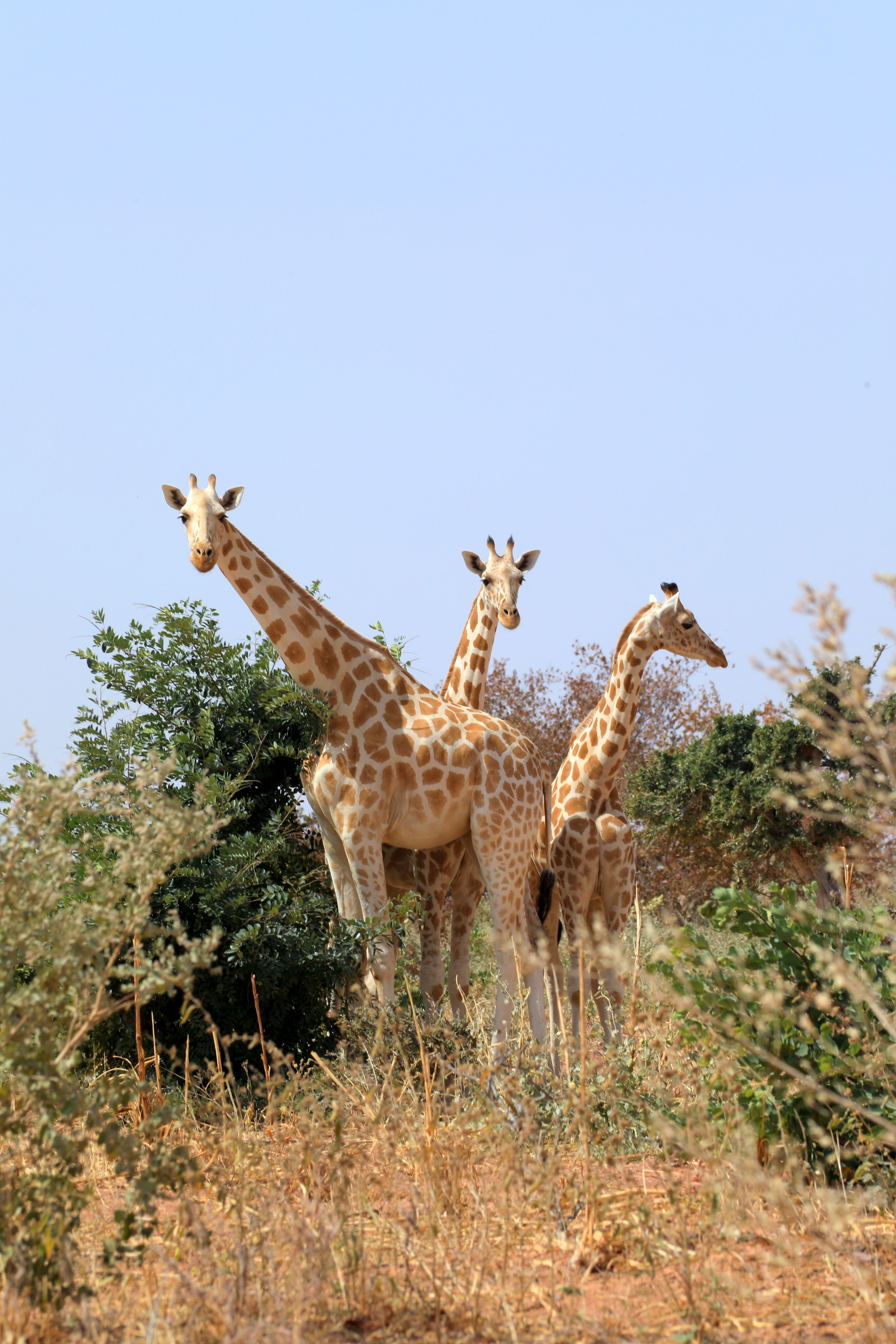
The Association for the Safeguarding of Niger’s Giraffes has been working for over ten years to protect the last population of giraffes in West Africa, the sole surviving representative of the Peralta subspecies, which has the distinctive feature of coexisting with local populations.
In the late 1990s, a “giraffe zone” was defined in Niger, covering the Kouré plateau and Dallol Bosso. At that time, the giraffe population numbered around a hundred individuals and was under serious threat of extinction. Today the situation has improved, and close to 200 giraffes now range across an area estimated at around 40,000 km².
This giraffe zone has the distinctive feature of being one of the most densely populated regions in Niger. Residents of the project’s intervention area live in great precarity and are mostly herders or farmers.
Driven by population pressure, the rapid expansion of farmland is coming at the expense of tiger bush, from which giraffes get their food.
As a result, growing conflict between humans and giraffes due to shrinking available space represents the most significant short-term threat. Local residents accuse the giraffes of eating their crops, while the giraffes see their habitat drastically shrinking to make way for cultivated land or bare soil. This phenomenon is currently pushing giraffes to seek out new territories and habitats.
As a result, since 2008, around twenty individuals have been located at Fandou, 80 km north of Kouré, outside their usual range.
The project’s main objective is to prevent conflict between humans and giraffes. Around 220 villages and hamlets are concerned by the project, representing a total population of 11,000 families and 73,000 inhabitants. The project will help improve understanding of the giraffes’ expansion zone.