


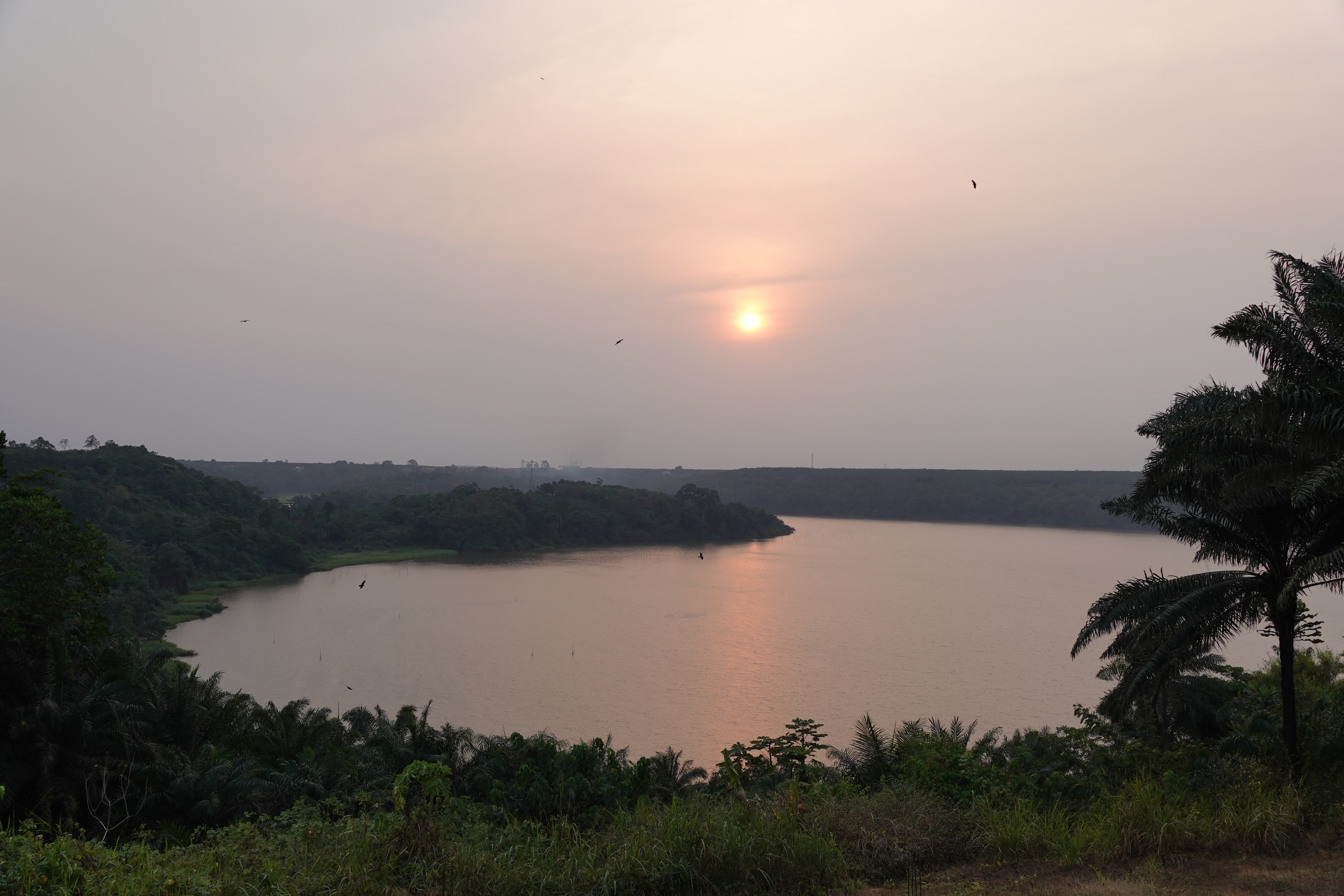
How a lake overrun by an invasive plant regained its balance: AMCO’s action on Lake Ossa
Publié le 4 May 2026In Cameroon, the Lake Ossa Wildlife Reserve hosts a unique ecosystem. Lake Ossa is home to particularly rich aquatic wildlife, including two emblematic and threatened species: the West African manatee (VU) and the softshell turtle (VU). But a few years ago, this fragile balance was severely disrupted.
It all began around 2016. A floating aquatic plant, salvinia—native to the United States—appeared in the lake, likely due to the opening of an upstream dam and deforestation along the lake’s banks. At first, it remained discreet and did not raise immediate concern. This lack of response, however, allowed the species enough time to become firmly established.
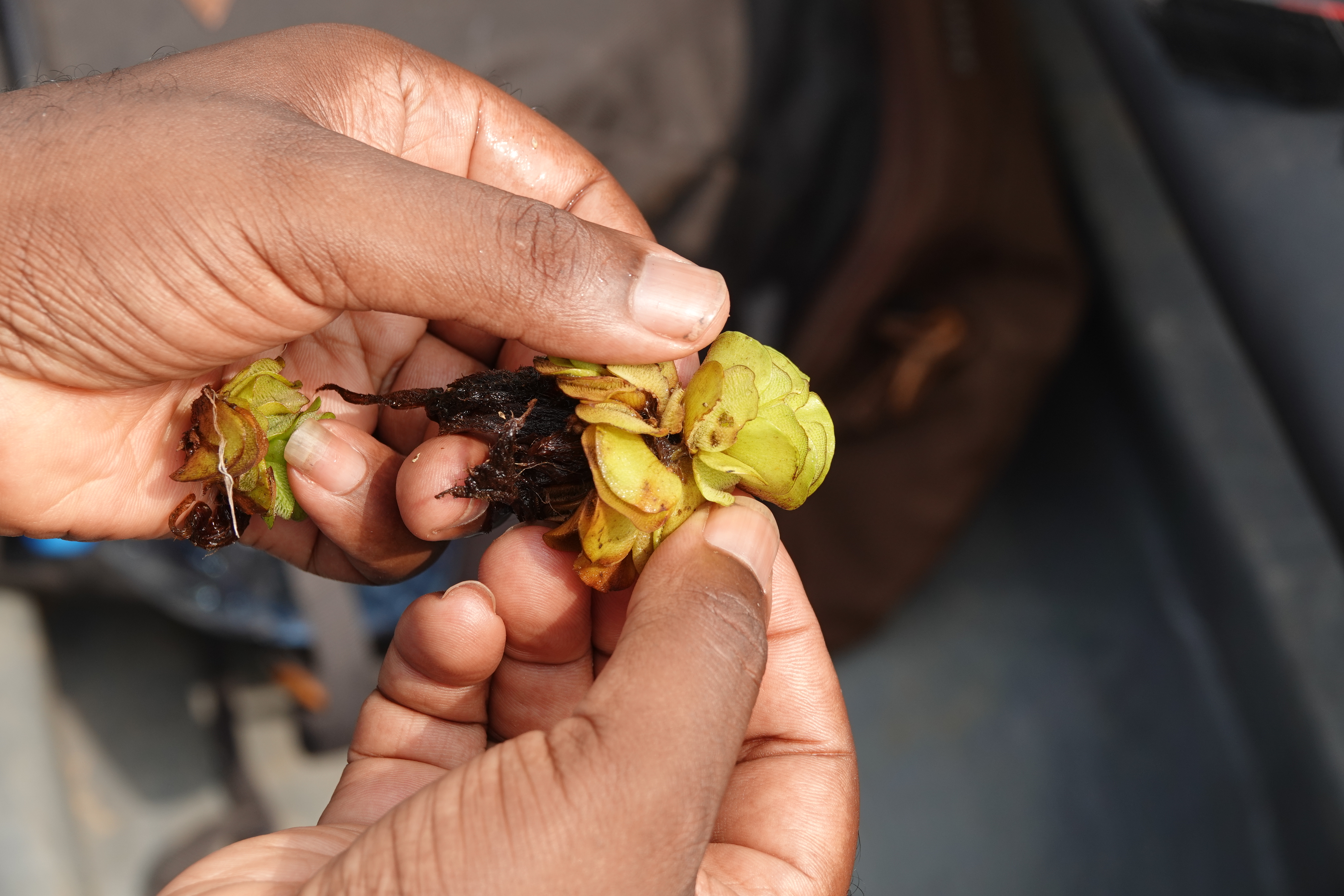
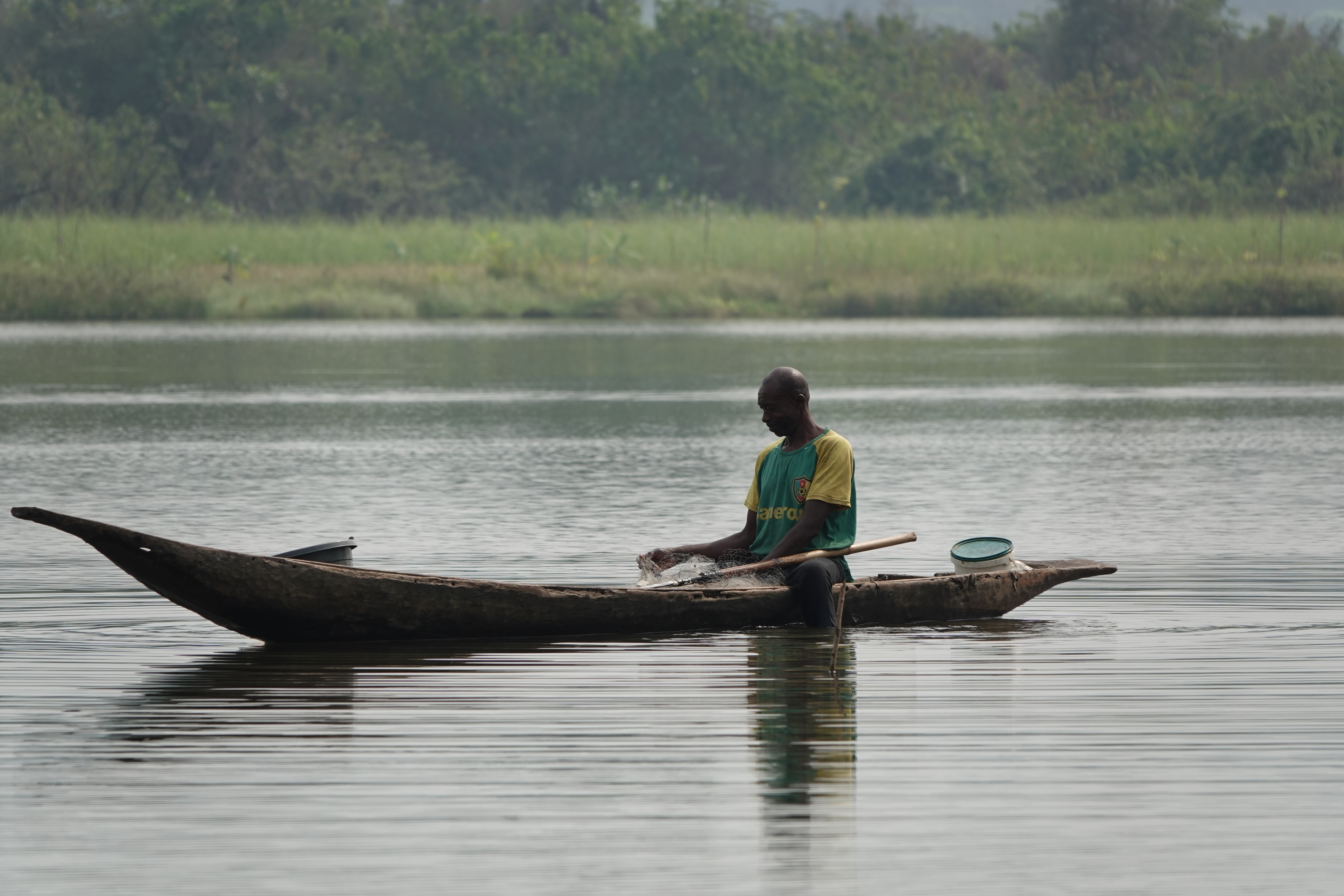
On the left, a member of the AMCO association shows the salvinia. On the right, a fisherman prepares his fishing net. Credit: Nicolas Salaun, 2024.
In just a few years, the situation shifted dramatically. Between 2019 and 2021, salvinia spread rapidly, eventually covering nearly half of the lake’s surface. A thick vegetative mat formed, blocking sunlight and reducing oxygen exchange. Eutrophication set in, gradually suffocating other forms of aquatic life.
The consequences are both visible and rapid. The manatee disappears from the area, deprived of the aquatic plants it feeds on (to learn more about AMCO’s conservation work for the manatee, read this article). Fishermen are also directly affected: their nets become entangled, navigation routes become impassable, and catches drop significantly. The lake, once a source of life and income, turns into a constrained environment.
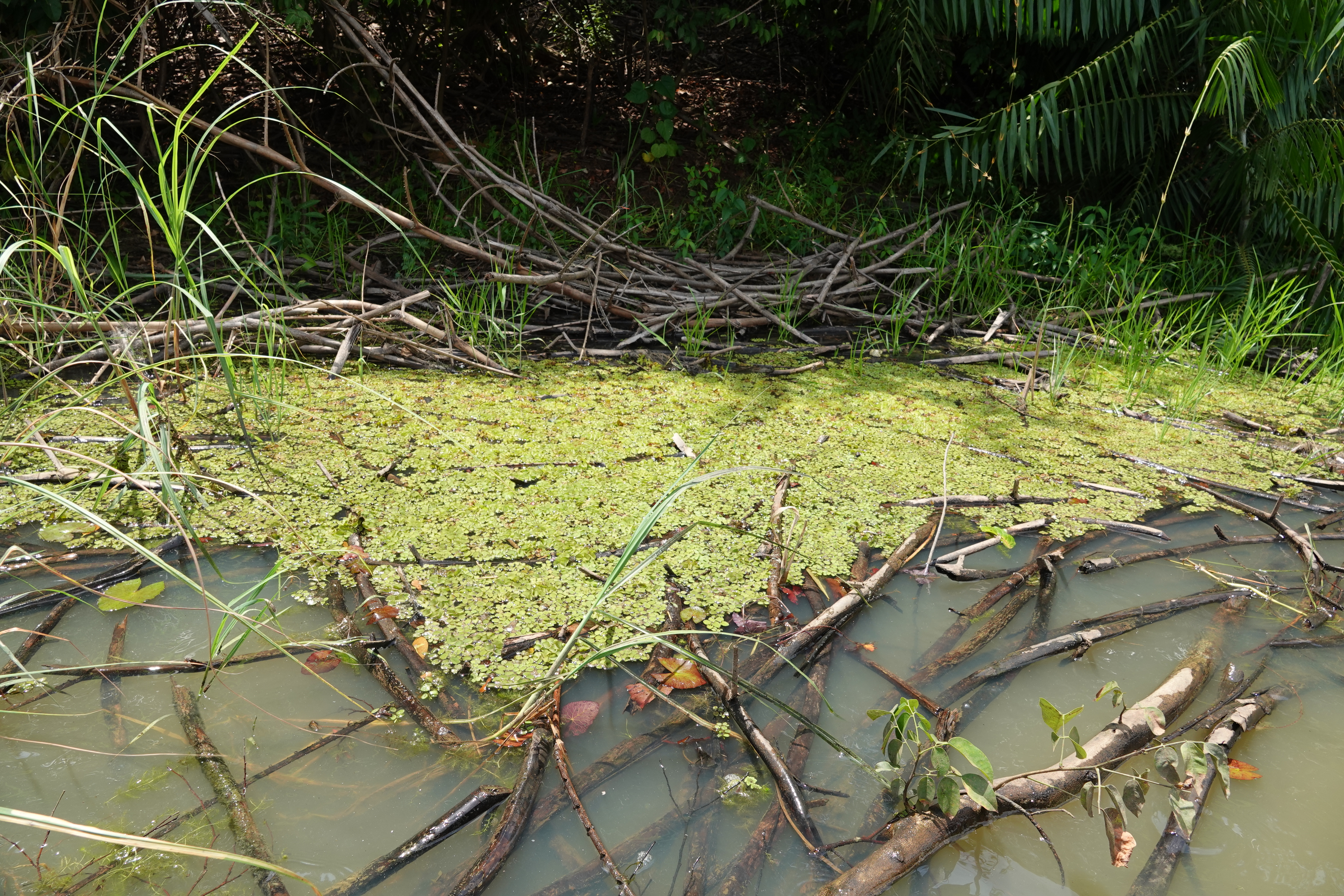
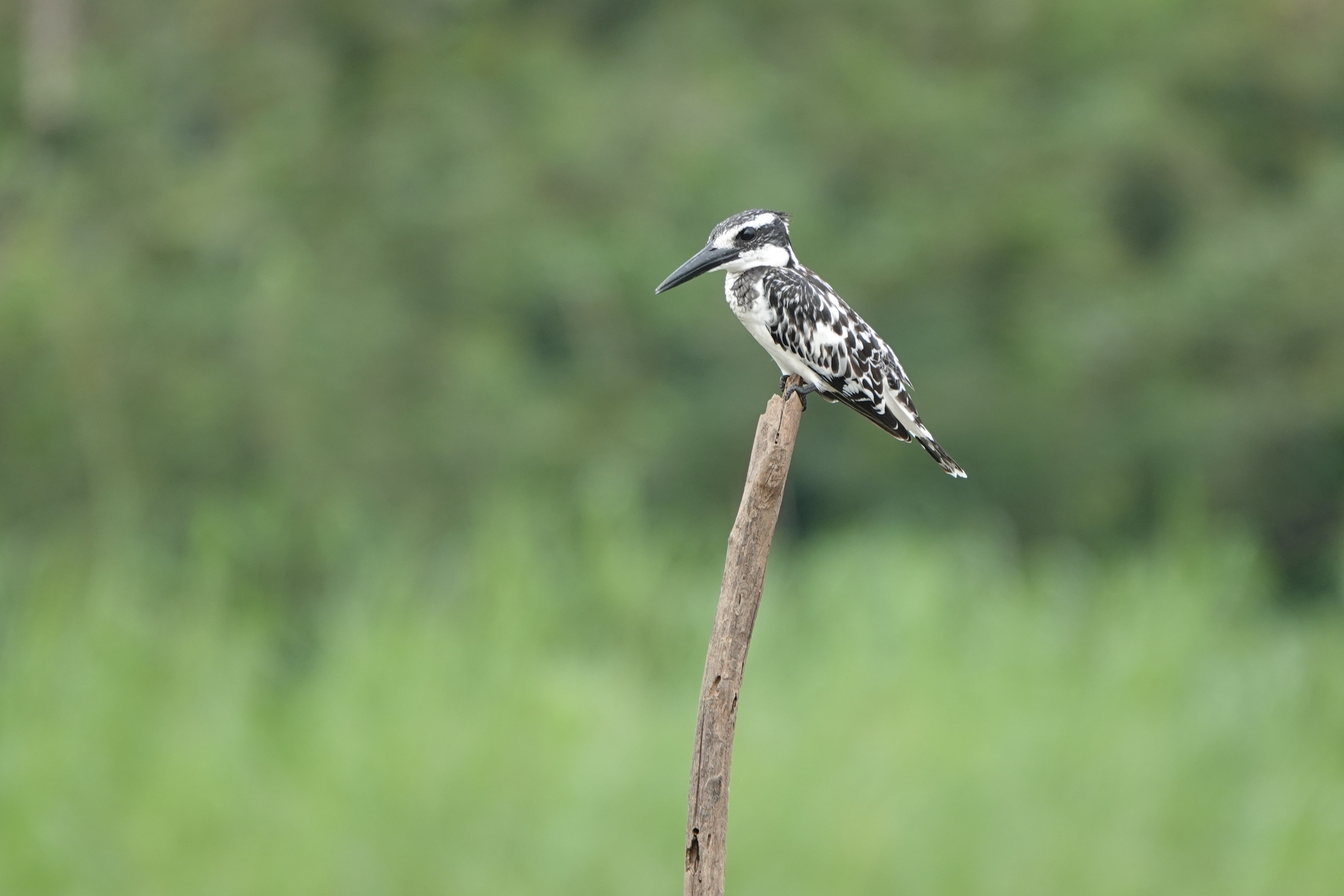
On the left, a shoreline of the lake invaded by salvinia (credit: Marie Furtado, 2026). On the right, a pied kingfisher (Ceryle rudis) (credit: Nicolas Salaun, 2024).
In response to this crisis, the AMCO association chose not to set conservation against local development. Instead, it built its response around riverside communities, seeking to maintain sources of income while addressing the invasive species.
In the first phase, manual removal operations of salvinia were implemented. However, the plant’s extremely rapid growth made these efforts insufficient. AMCO then chose to turn this constraint into an opportunity. The harvested salvinia is now valorized as ecological charcoal. Local communities are trained in an artisanal process combining carbonization, crushing, mixing with cassava starch, followed by molding and drying. Since 2021, this activity has enabled the production of more than 100 kg of charcoal, while generating additional income for already vulnerable communities.
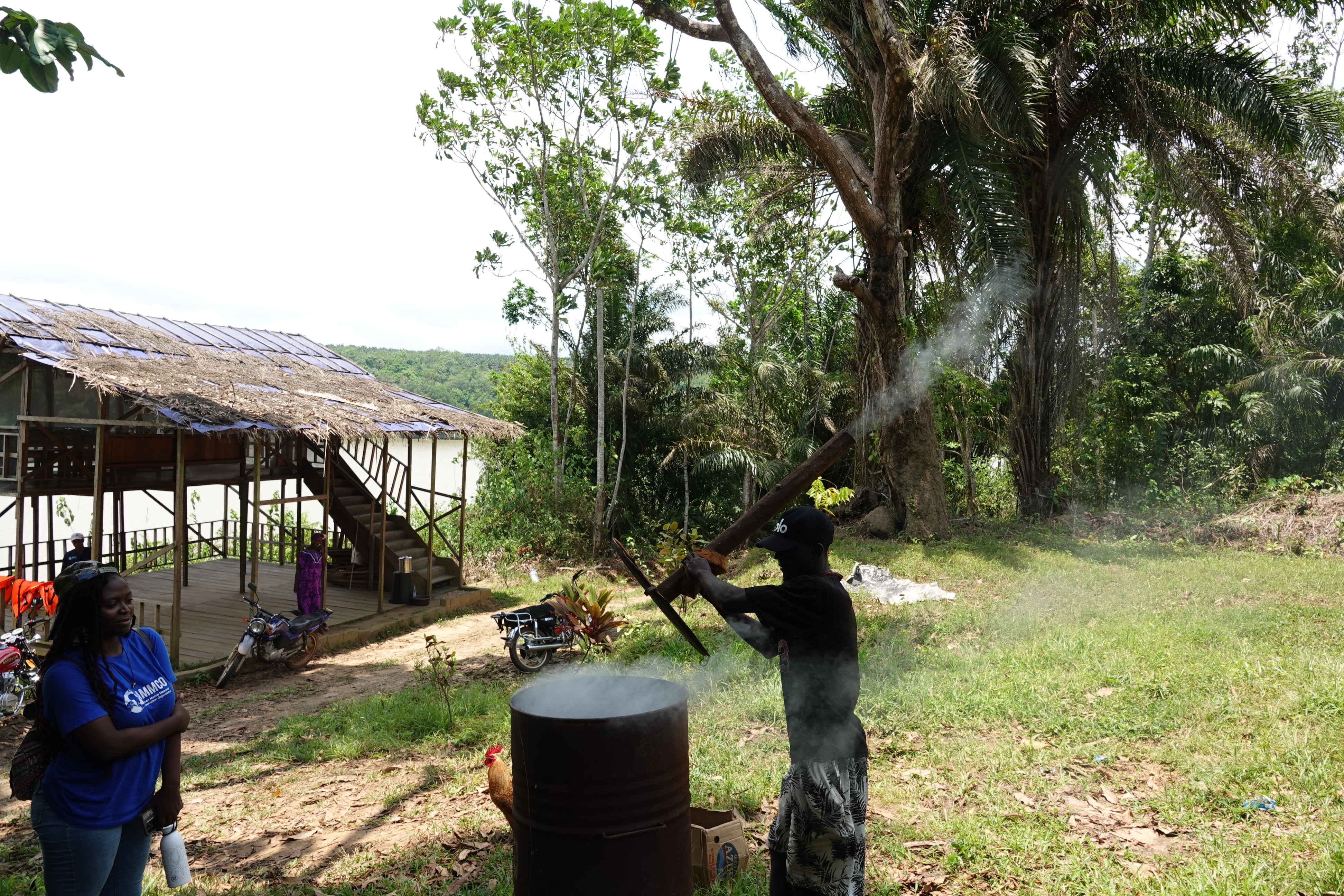
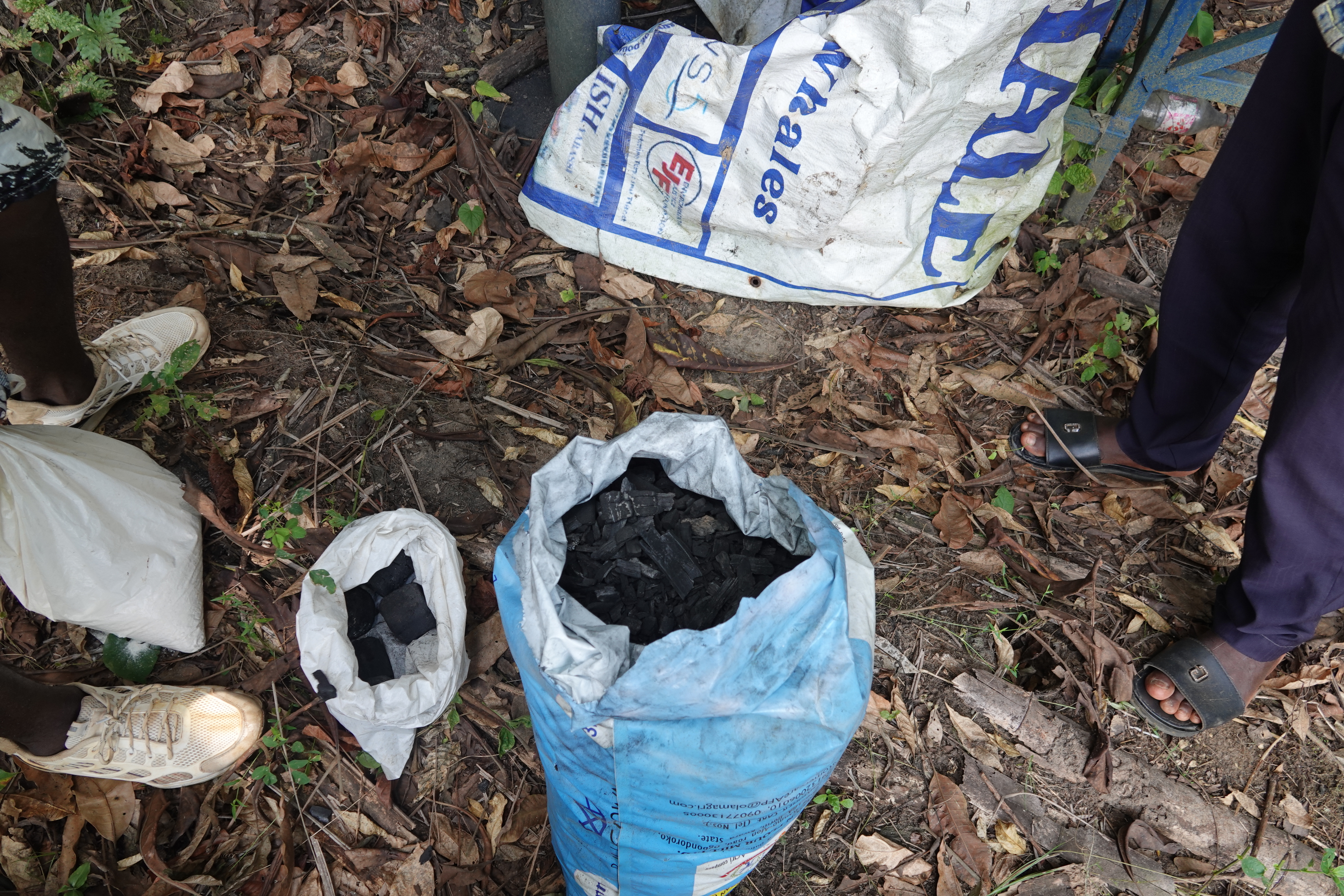
Production of ecological charcoal made from salvinia. Credit: Marie Furtado, 2026.
At the same time, the association supports the development of local ecotourism. Fishermen are trained to become eco-guides, while women from the village take part in welcoming visitors and providing catering services. The lake continues to attract people thanks to its beauty and rich natural environment. While some visitors express disappointment at not seeing a manatee—a rare and never guaranteed sighting—the overall experience remains positive. Plans to improve infrastructure, particularly accommodation facilities, are also being considered.
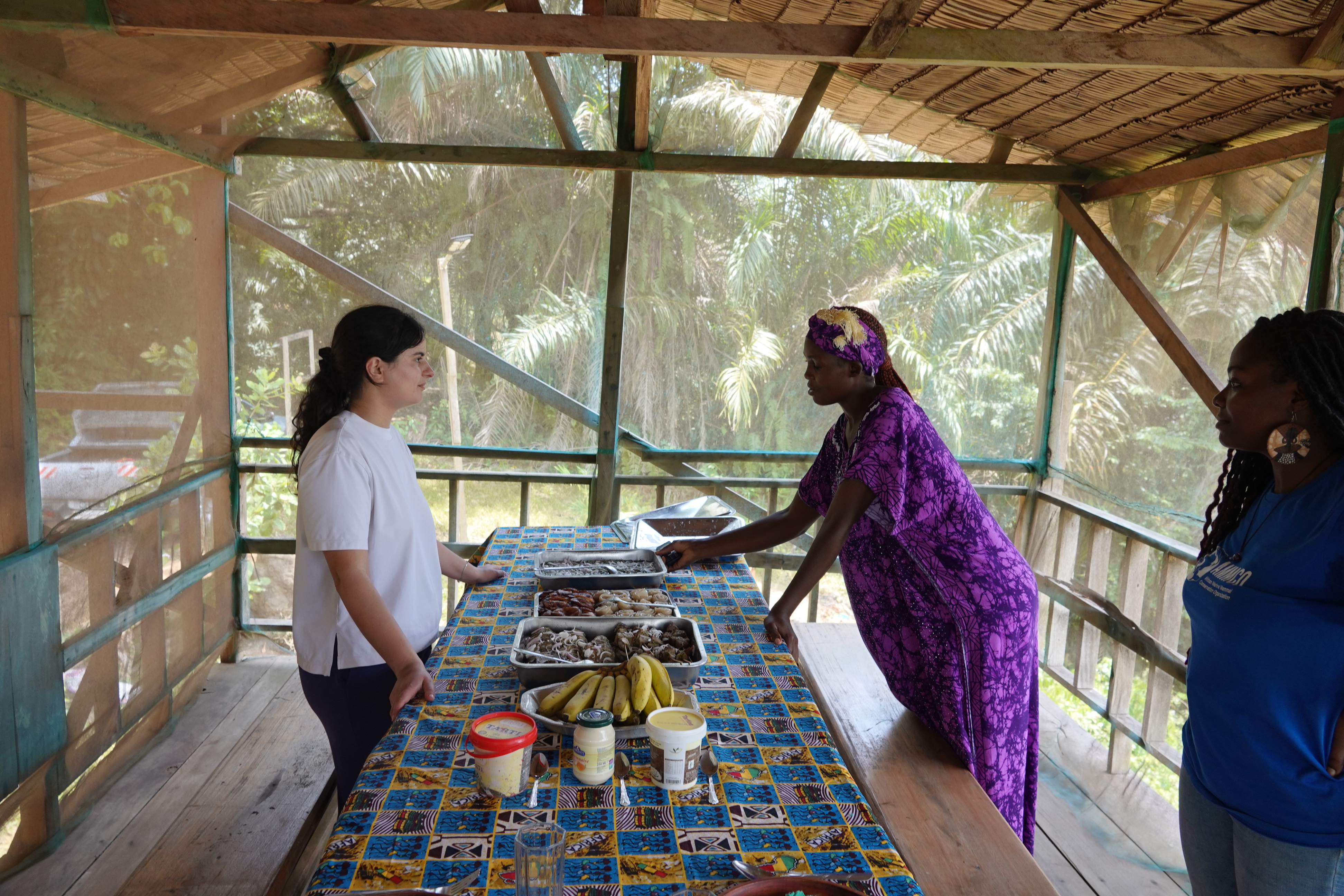
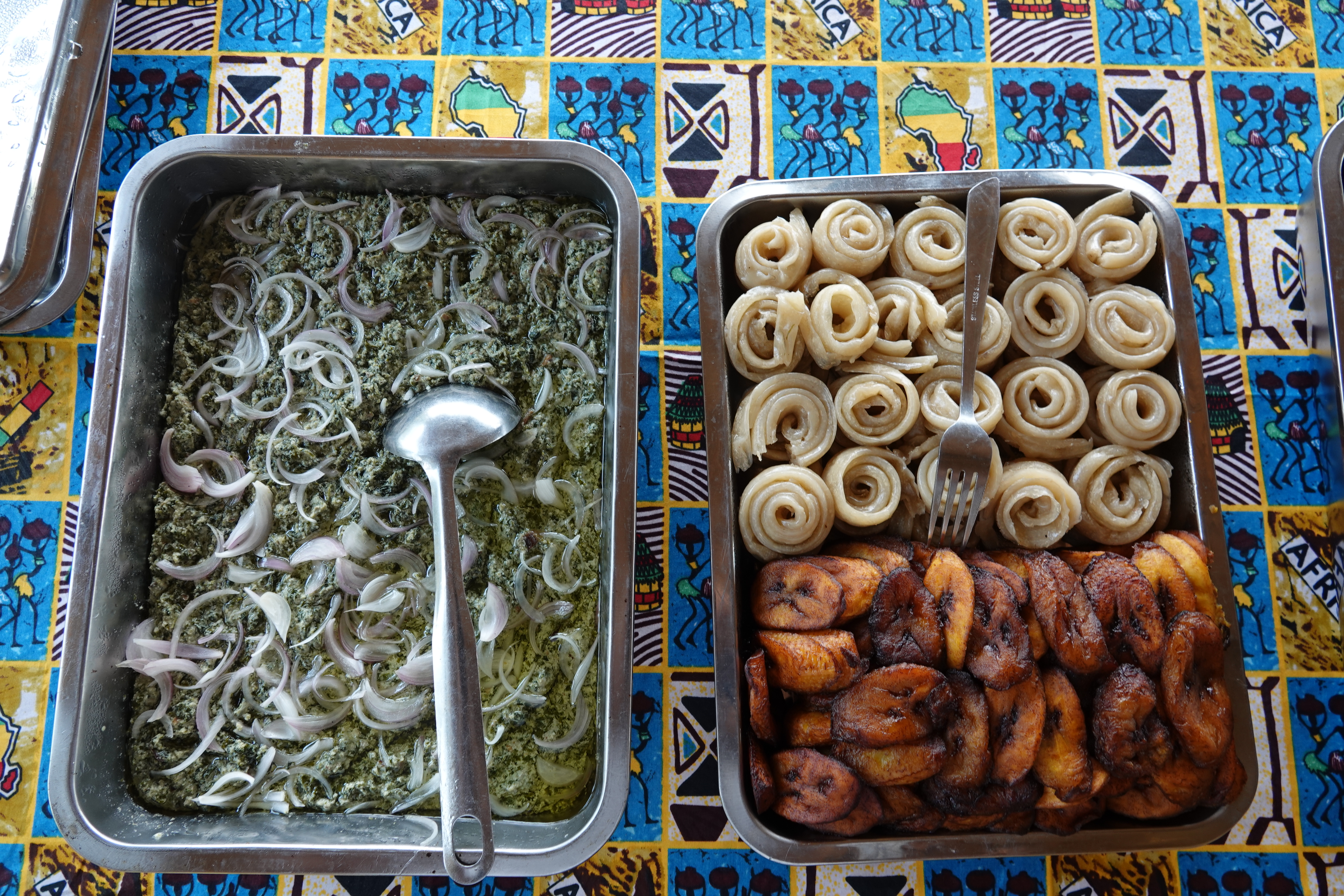
During the monitoring and evaluation mission, Marie, a project officer at PPI, shares a meal prepared by local women after visiting Lake Ossa. Credit: Marie Furtado, 2026.
However, AMCO is aware that these initiatives are not enough to address the root of the problem. Starting in 2021, the association implemented a more targeted strategy: biological control. A specific insect, the salvinia weevil, was introduced into the lake. Its mechanism is particularly interesting: it feeds exclusively on this invasive plant and cannot survive outside aquatic environments, thereby limiting any risk to other species.
The effects are rapid. Within a year, the salvinia mats turn brown and begin to break down. The lake gradually becomes navigable again. Between 2022 and 2023, signs of recovery multiply: the manatee and the softshell turtle return. Their presence serves as a clear indicator of the ecosystem’s improvement.
This success remains partial. In some areas, where other plant species have colonised the salvinia mats, the effectiveness of the weevil is more limited. And above all, the return to a healthier state of the lake leads to another unexpected effect.
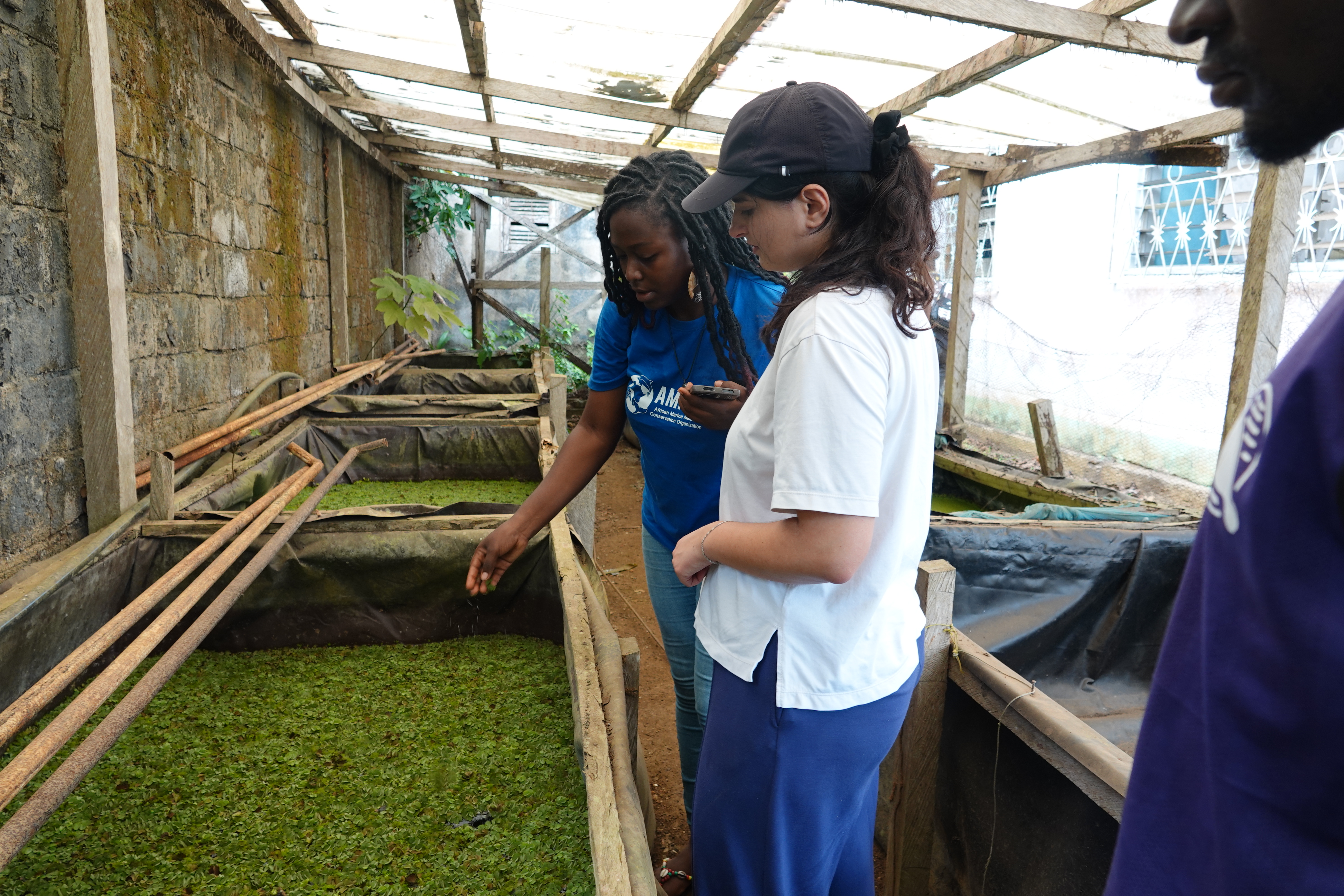
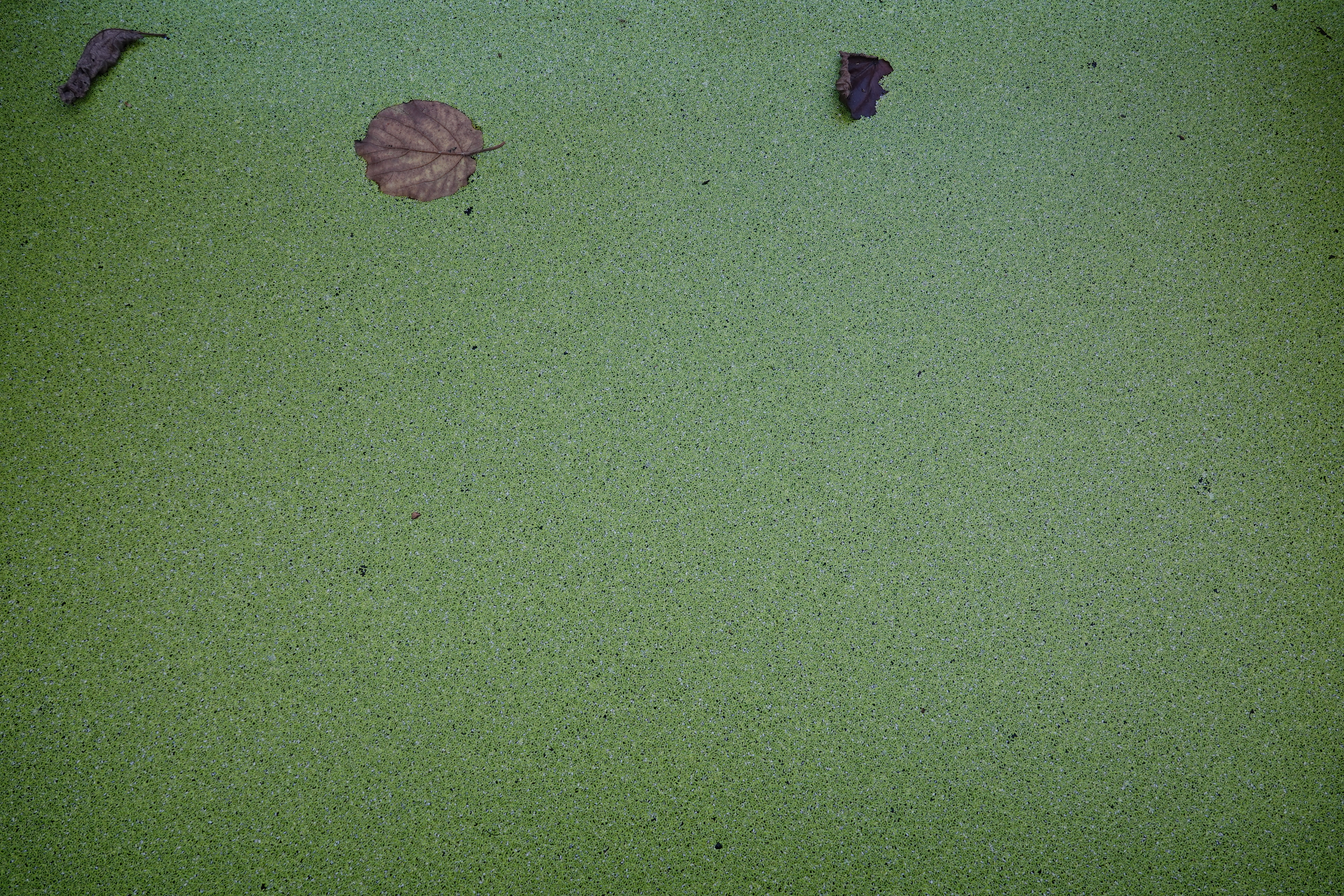
Presentation by AMCO of its experimental laboratory space used to study the salvinia–weevil relationship under controlled conditions. On the right, a basin covered with salvinia. Credit: Marie Furtado, 2026.
With the resumption of activities, pressure on resources increases again. Fishing, which had sharply declined during the crisis, restarts intensively. Fish stocks, which had recovered, begin to decrease. The risk is no longer an invasive plant, but the overexploitation of resources.
AMCO then adapts its approach. The association conducts awareness campaigns with fishermen, promoting compliance with the subsistence artisanal fishing code. The objective is clear: to enable sustainable use of resources that can meet community needs without compromising the long-term balance of the lake.
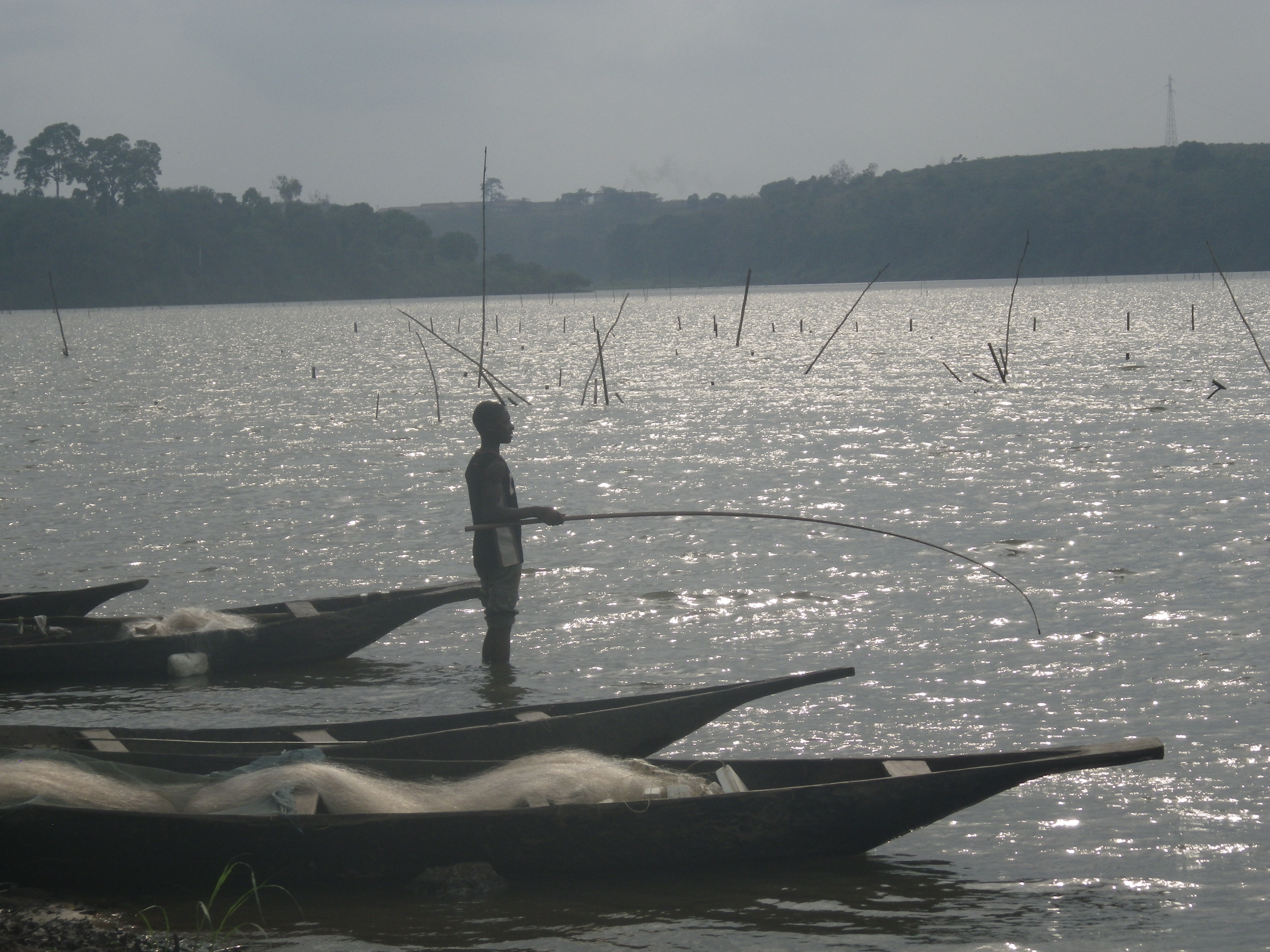
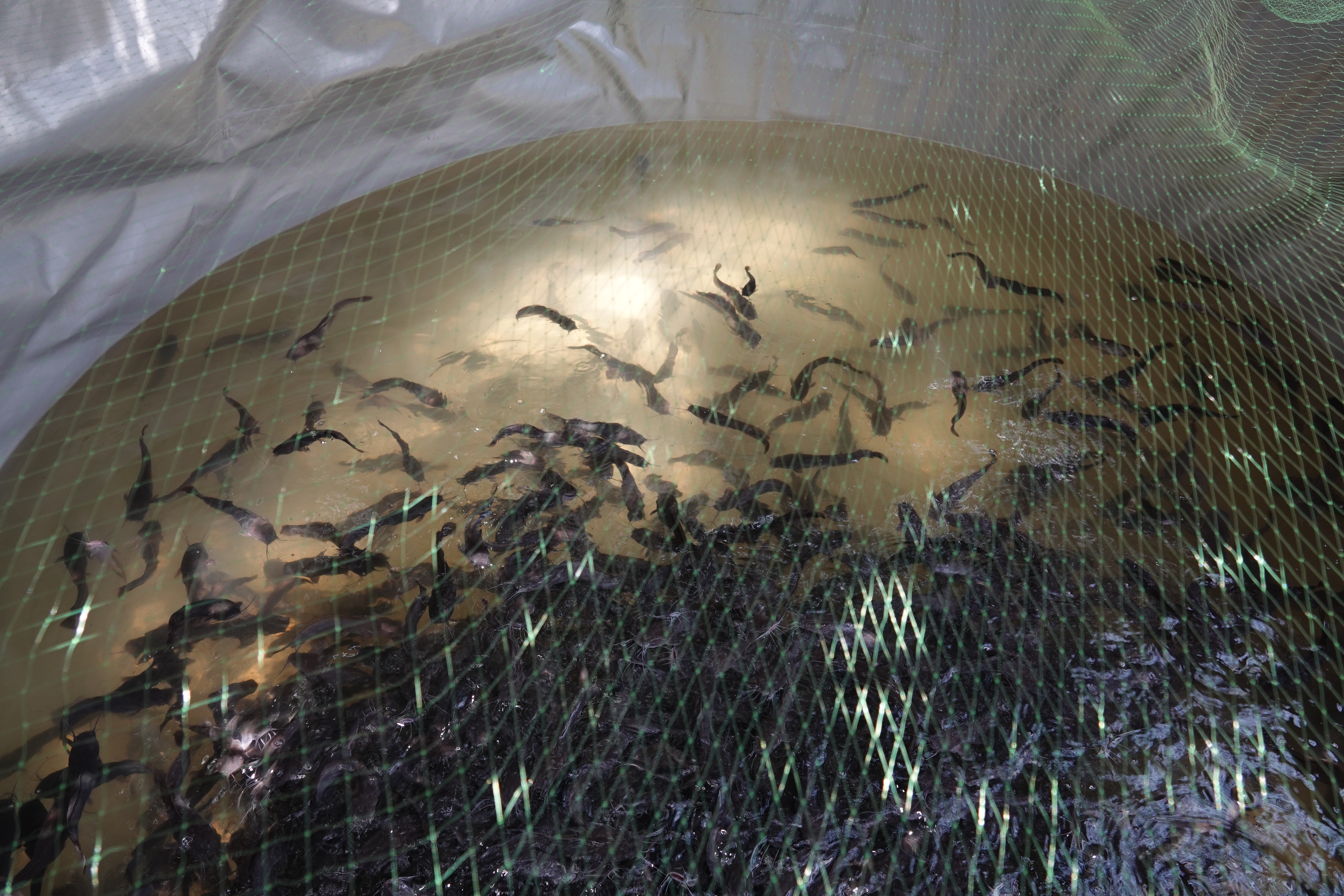
On the left, a fisherman on Lake Ossa. Credit: Paul Estève, 2015. / On the right, a fish farm pond developed as an alternative to fishing to reduce pressure on natural resources. Credit: Marie Furtado, 2026.
The story of Lake Ossa clearly illustrates the complexity of conservation challenges. It is not only about restoring an ecosystem, but about finding a sustainable balance between biodiversity protection and human activities. Through its actions, AMCO demonstrates that an integrated, locally grounded approach can deliver tangible results—provided it continuously adapts to evolving local dynamics.
Today, the lake is breathing again. But its future will depend on the collective ability to maintain this restored balance.
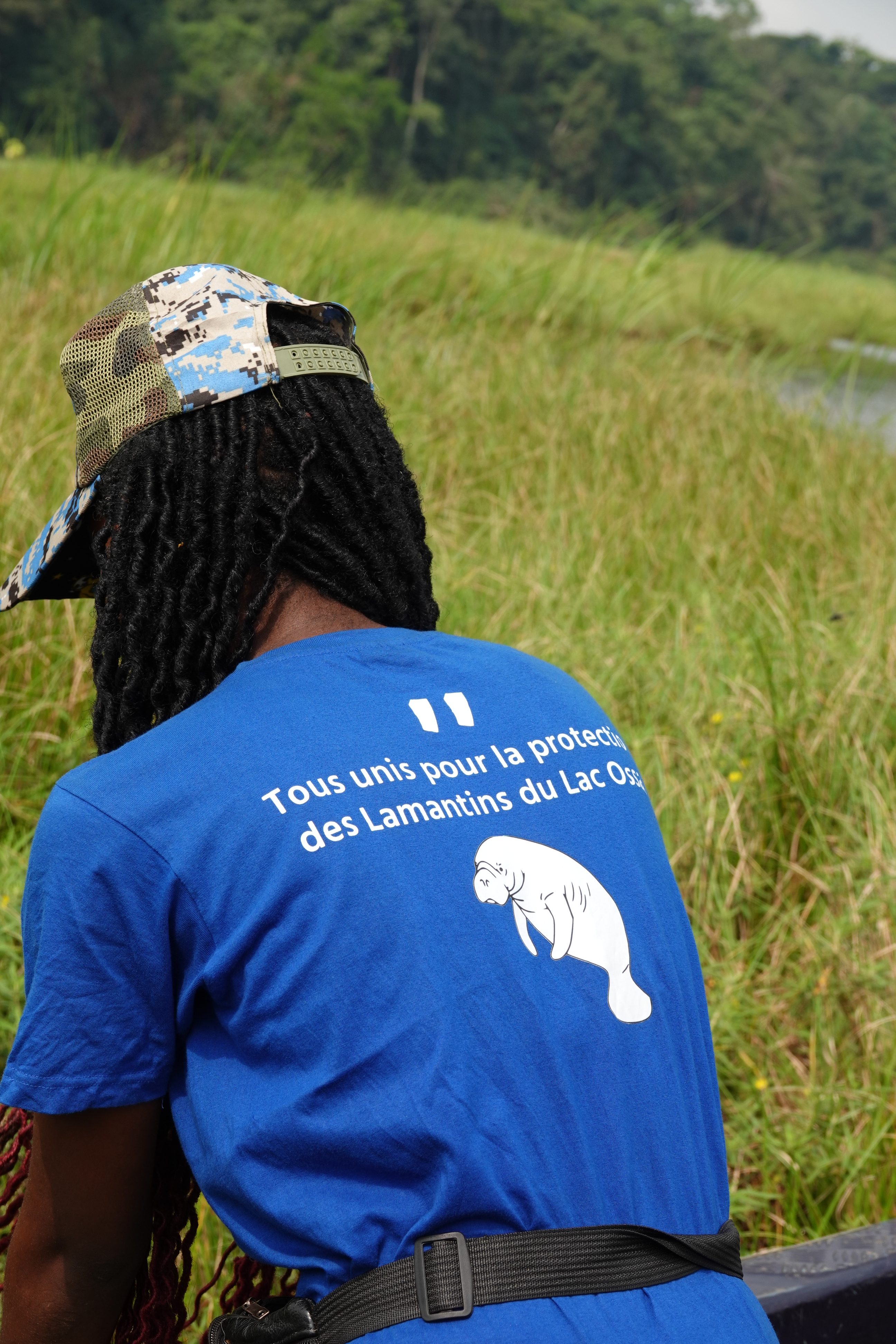
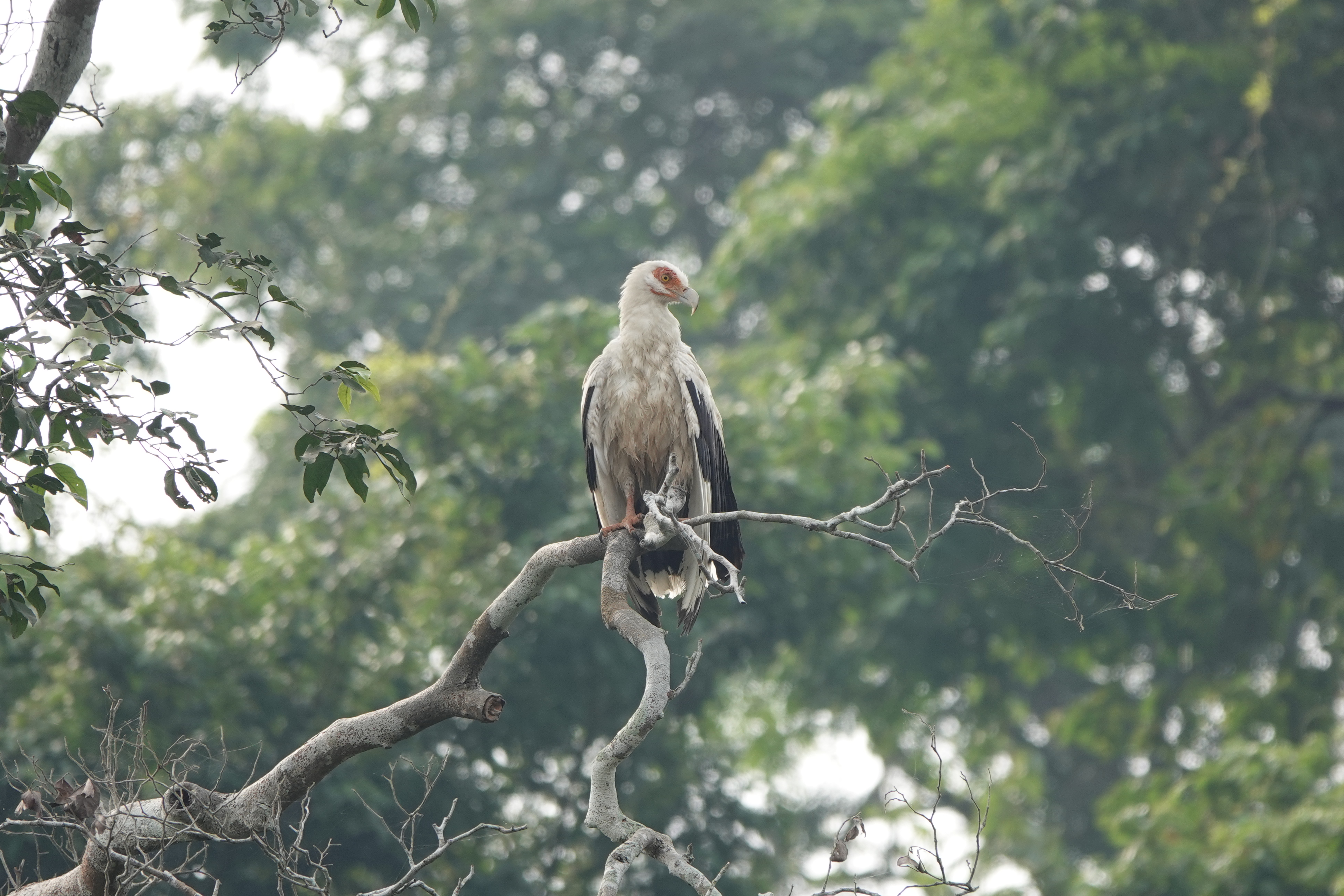
On the left, a member of the AMCO association in the field. On the right, an African palm-nut vulture (Gypohierax angolensis) perched above the lake. Credit: Nicolas Salaun, 2024.