


Preserving the mysterious African manatee – Help Congo
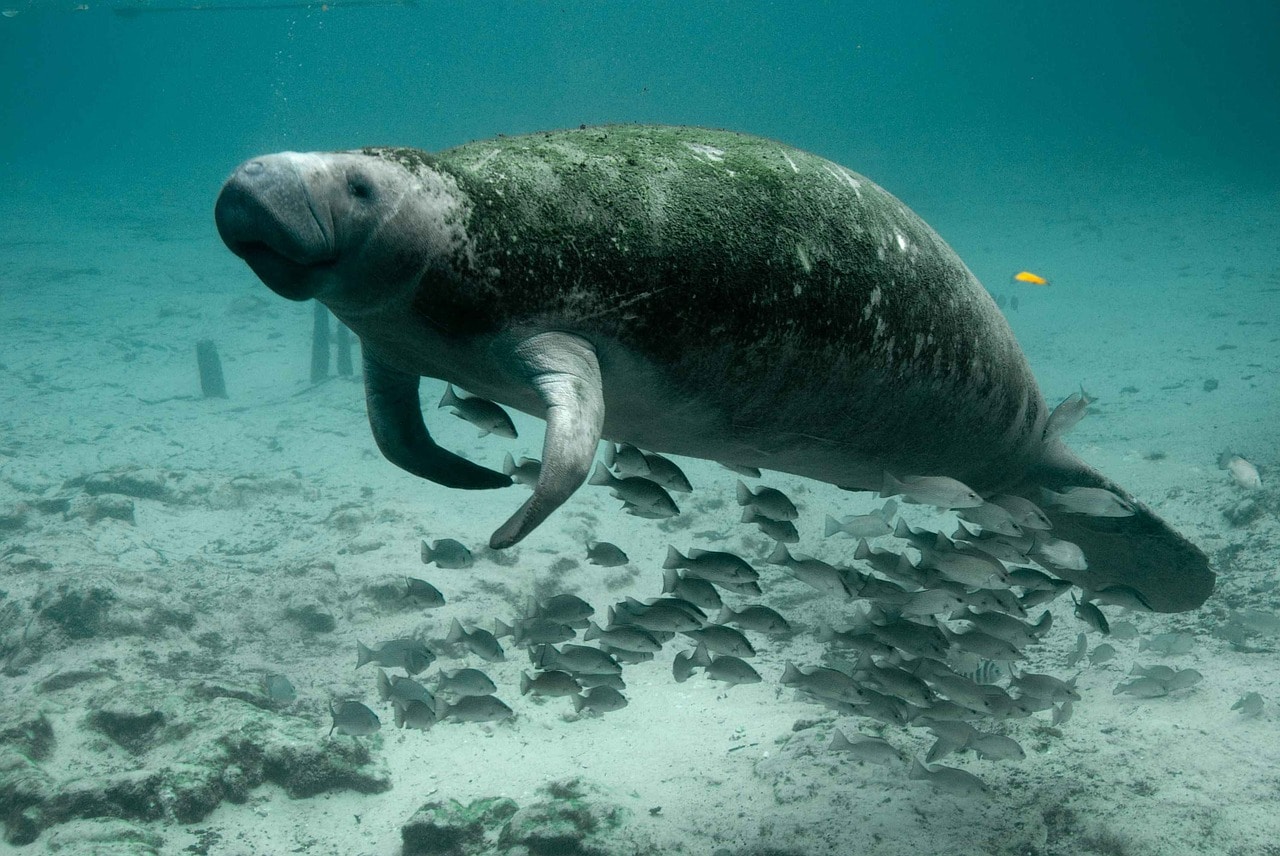
Publié le 9 December 2025The African manatee (Trichechus senegalensis), a discreet aquatic giant listed as Vulnerable on the IUCN Red List of threatened species, remains one of the continent’s most mysterious and least studied mammals. In the lagoons, mangroves, and rivers of the Conkouati-Douli National Park in Congo, this species plays a key ecological role: maintaining aquatic seagrass beds, supporting ecosystem productivity, and stabilizing coastal environments.
Since 2023, the CSO HELP Congo, with support from the PPI, has been leading an ambitious program aimed at better understanding the species, reducing the pressures it faces, and strengthening its integration within the park’s community dynamics.
Understanding local uses
Effective conservation of an aquatic species like the manatee first requires understanding the human practices that shape its environment. In Conkouati-Douli, artisanal fishing, canoe travel, gold panning, slash-and-burn agriculture, and charcoal production transform habitats and influence the presence of the manatee.
To shed light on these dynamics, HELP Congo conducted a survey among fishers and local residents. In total, 76 fishers were interviewed, helping to document fishing areas, identify the presence of nets around seagrass beds, and better understand pressures related to fishing, accidental captures, gold panning, deforestation, and pollution.
These social data form an essential foundation: they identify areas of conflict, strengthen the detailed understanding of local practices, and help guide conservation efforts in a realistic and locally acceptable way.
Understanding the ecosystem: mapping, measuring, analyzing
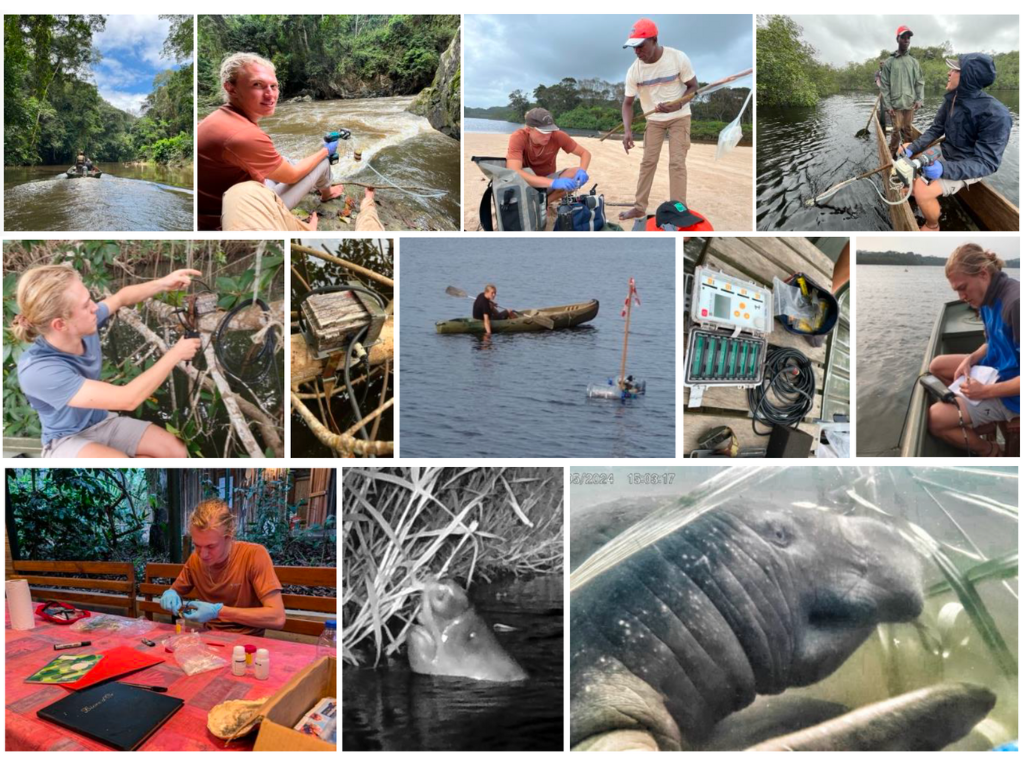
To protect a species, you must understand its habits, know which places it prefers and why. This is why HELP Congo carried out scientific research on the manatee in the Conkouati lagoon.
Mapping seagrass beds and feeding areas
Through a monitoring approach combining boat surveys, drone imagery, and GIS, 100% of the aquatic seagrass beds were identified and mapped.
This mapping includes:
– aquatic and semi-aquatic seagrass beds
– potential feeding areas
– assumed migratory routes
– refuge zones.
Analyzing the structure of the lagoon
A comprehensive collection of physico-chemical data was carried out at more than 50 sampling points: salinity, pH, temperature, conductivity, mercury levels, and presence of plastics.
These data help explain why certain areas are preferred by the manatee and how the environment is evolving under human influence.
Bathymetry and water dynamics
Using a sonar, HELP Congo mapped the lagoon floor, identifying shallow areas suitable for the species as well as potential ecological corridors.
This in-depth work provides a precise spatial framework for future protection measures.
Studying the species using new technologies
Environmental DNA: detecting without disturbing
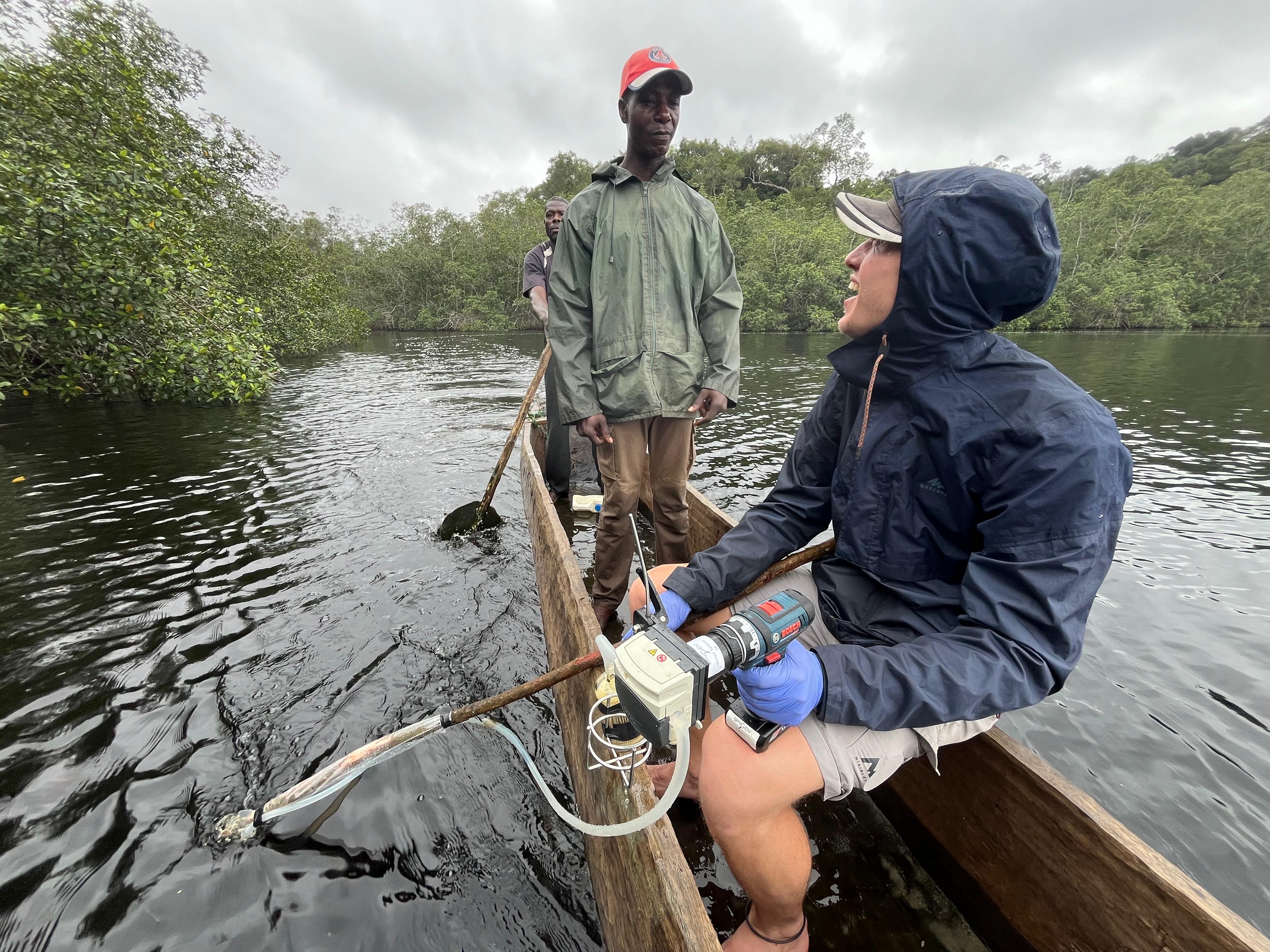
Two eDNA campaigns were carried out, covering 55 sites. The analyses confirm the presence of the manatee in several key areas of the lagoon, but also in the Kouilou River. The resulting maps provide a new and much more detailed understanding of the species’ distribution.
Underwater cameras: a world first
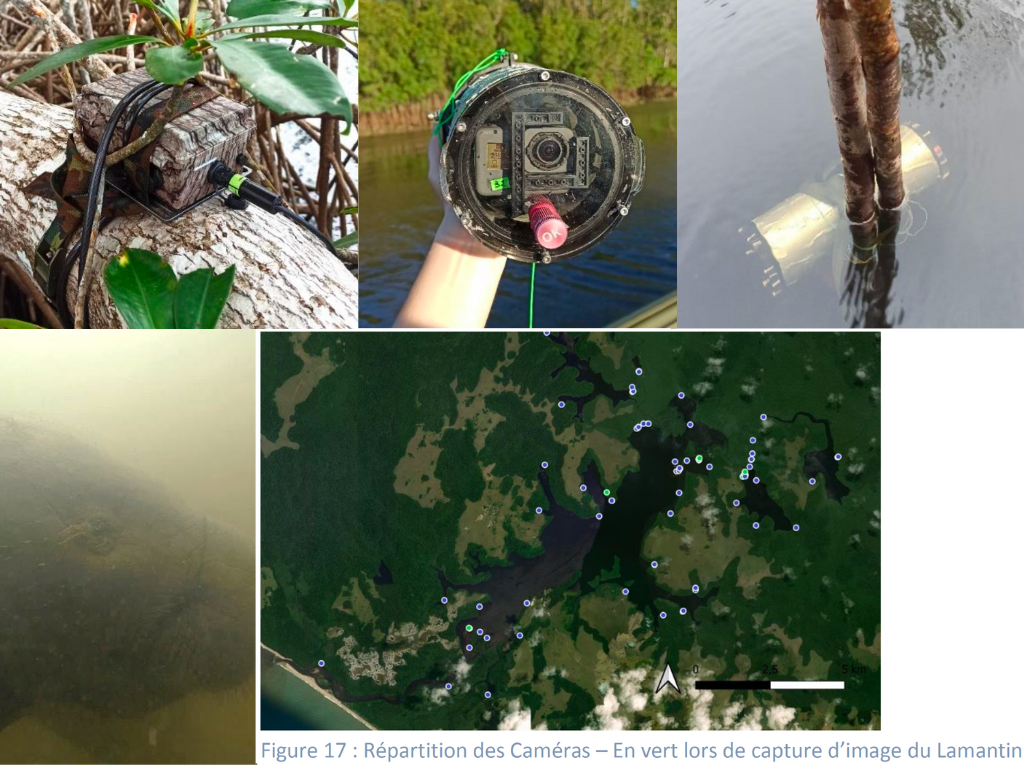
The teams installed underwater cameras in strategic areas, resulting in:
– 150 hours of footage
– more than 10 manatees filmed
– the first-ever global footage of Trichechus senegalensis in its natural habitat
Some videos even made it possible to identify individual animals through distinctive markings..
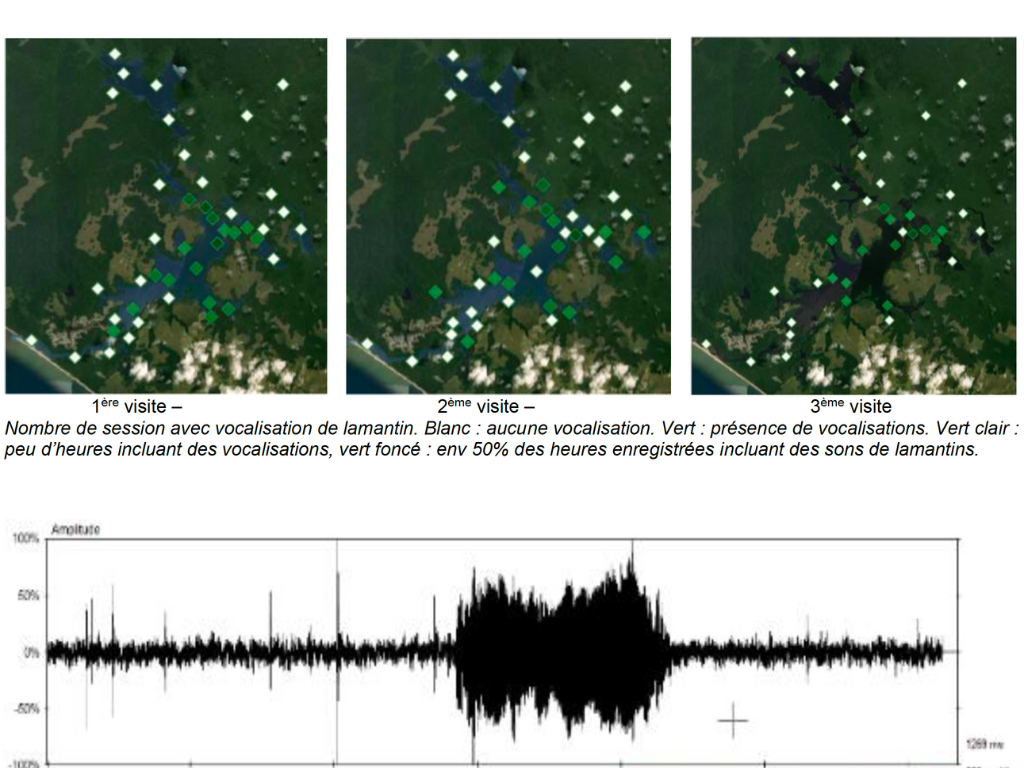
Acoustics: listening to count
43 acoustic sampling points enabled the collection of more than 10,000 hours of recordings, including over 3,000 vocalizations analyzed as part of a doctoral thesis launched in 2024.
These data pave the way for a future monitoring protocol based on sound, more reliable than direct observation in these turbid waters.
Involving local communities
Awareness-raising in schools and villages
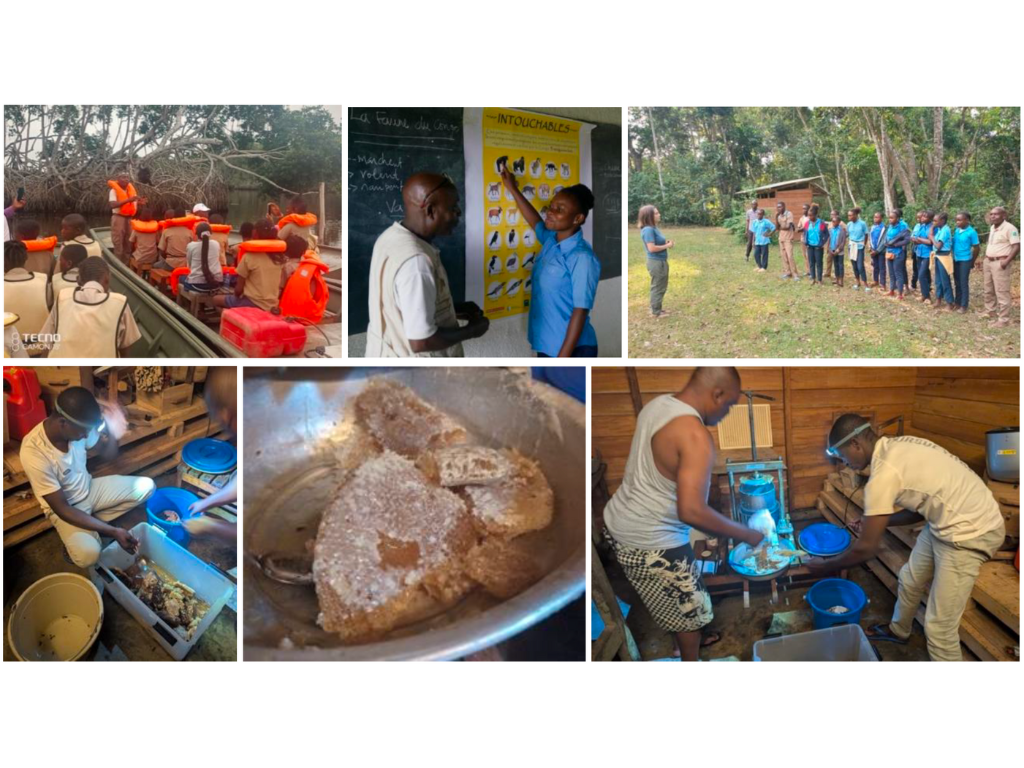
A manatee-focused educational activity was developed and delivered in at least 8 schools, reaching between 300 and 500 children, in addition to activities conducted in villages. The goal: to foster a culture of species and biodiversity protection from an early age.
Sustainable economic alternatives
To reduce pressure on wildlife, HELP Congo supports several community initiatives aimed at developing sustainable economic activities, such as beekeeping (24 hives distributed, 8 people trained), handicrafts, and even local tourism!
Conclusion: toward strengthened management of key areas
All of these actions converge toward a single goal: protecting the critical areas essential for the conservation of the manatee in the Conkouati lagoon.
The scientific and human capital generated by the project now enables HELP Congo to engage, together with Noé — the manager of Conkouati-Douli National Park — in solid discussions around the creation of a strictly protected area dedicated to the manatee, the installation of signage, and the strengthening of monitoring by eco-guards.
Thanks to the involvement of local communities — through awareness-raising, surveys, and sustainable economic alternatives — these future measures have a strong chance of becoming sustainably embedded in local practices.