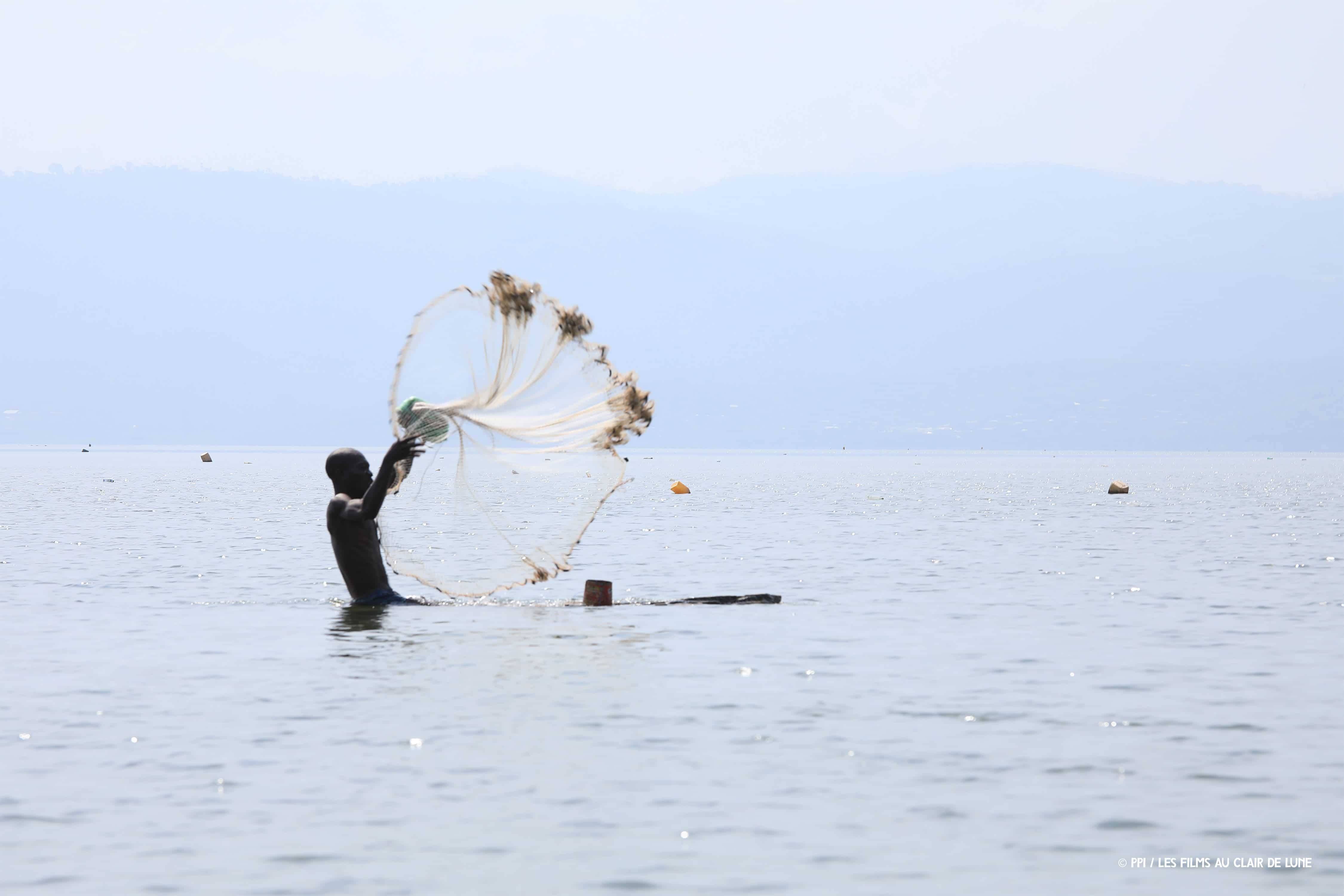
The project is located on Lake Albert, in eastern Democratic Republic of Congo, in the Ituri region, and more specifically in the southern part of the lake, near the community reserves of Nana (Tchomia), Kasenyi-Mugumba, Malonga-Kapuru, and the Semliki Delta. Overexploitation of fisheries resources, driven by population pressure and destructive fishing practices, threatens the lake’s feeding and spawning grounds.
In order to ensure the renewal of fish stocks (some species being endemic) and thereby help improve food security for riparian communities, Grapedeco has identified 16 sites (along around 30 km of shoreline) that should be given priority protection by banning illegal fishing methods (beach seine nets, mosquito nets, cast nets, and fishing using toxic plants and products) and reed cutting.
The project therefore aims to provide members of 25 fisheries, belonging to 3,500 households (around 12,500 people), with the technical, methodological and financial support they currently lack, in order to develop, together with them, opportunities for community-based conservation.
The ultimate aim of this project is the conservation of Lake Albert’s biodiversity, which must be achieved through the protection and conservation of certain fisheries areas of interest — namely spawning grounds, which, if irrationally managed, would suffer a collapse in aquatic resources, with all the ensuing consequences.