The two income-generating activities initiated by the MAB project, beekeeping and giant African land snail farming, are further developed through the provision of equipment
- Creation - management - governance of protected and conserved areas
A Rocha Ghana is a major NGO benefiting from funding from AfD/FFEM (Territoires de Conservation project), USFWS, UNESCO and IUCN Netherlands; it has solid experience establishing Community Resources Management Areas (CREMA) on the periphery of Ghana’s protected areas (Mole National Park, Bia Conservation Area, etc.), resulting in the community-based protection of 120,000 ha.
Indeed, since 2001, the Ghanaian State, through the Wildlife Division of the Ministry of Land and Natural Resources, has authorised the creation of CREMAs — a system for transferring natural resource management to communities — by issuing an official certificate.
The project is located 35 km south of Kumasi, in the Ashanti region, near Lake Bosumtwi, one of the world’s six largest meteoric lakes and the country’s only natural lake, covering an area of 5,200 ha. A mix of forest habitats and wetland habitats gives rise to unique flora and fauna: the site hosts many endemic species, in particular 11 species of cichlids (Hemichromis frempongi and Tilapia busumana), black-and-white colobus monkeys, civets, and duikers. A system of sacred caves also makes the area important for its cultural and traditional significance.
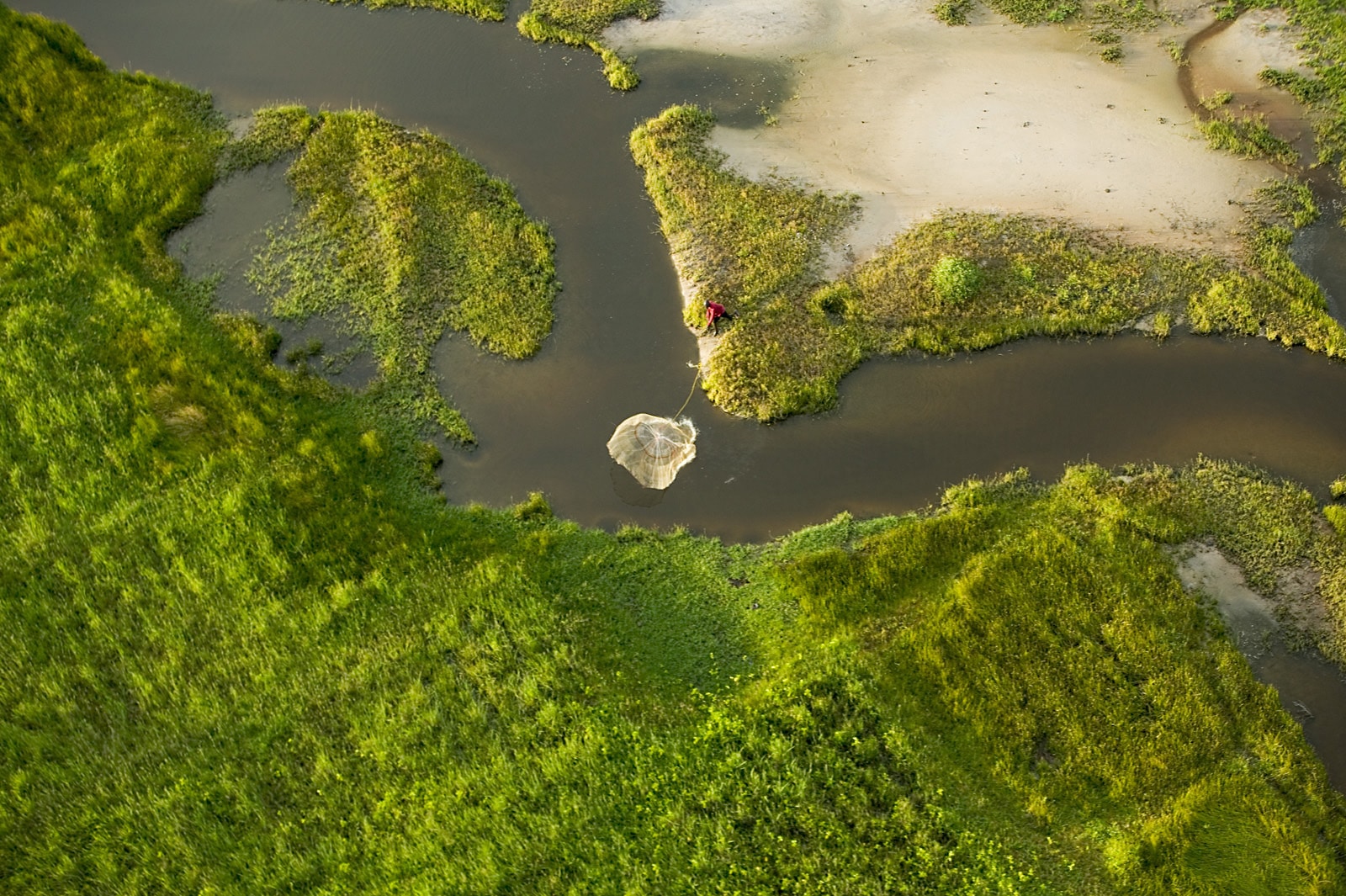
The lake ecosystem is nevertheless heavily threatened by overfishing (around 1,000 fishers live along the lake’s shores) and by other human activities that pollute the lake’s waters, which have no outflow, causing stagnation and eutrophication.
In an attempt to protect the lake, between 2011 and 2012 UNESCO worked with ARG, Friends of the Earth and the Forest Research Institute Ghana (FORIG) to launch the process of creating a biosphere reserve encompassing the lake. However, its long-term sustainability cannot be guaranteed without the involvement and capacity building of the communities living there — hence the value of creating a CREMA covering the 5,200 ha, including a strictly protected core zone, and continuing the development of income-generating activities (IGAs) initiated by the UNESCO project.
26 communities (and villages), comprising around 12,000 people (200 households), will be involved in the creation of the CREMA around the lake’s perimeter (approximately 32 km). The process of creating a CREMA takes 3 years; the PPI will support the 2-year phase leading to the recognition of traditional laws, the establishment of legal CREMA management structures (the Community Resources Management Committee – CRMC – and the CREMA Executive Committee – CEC), and the capacity building of its managers.