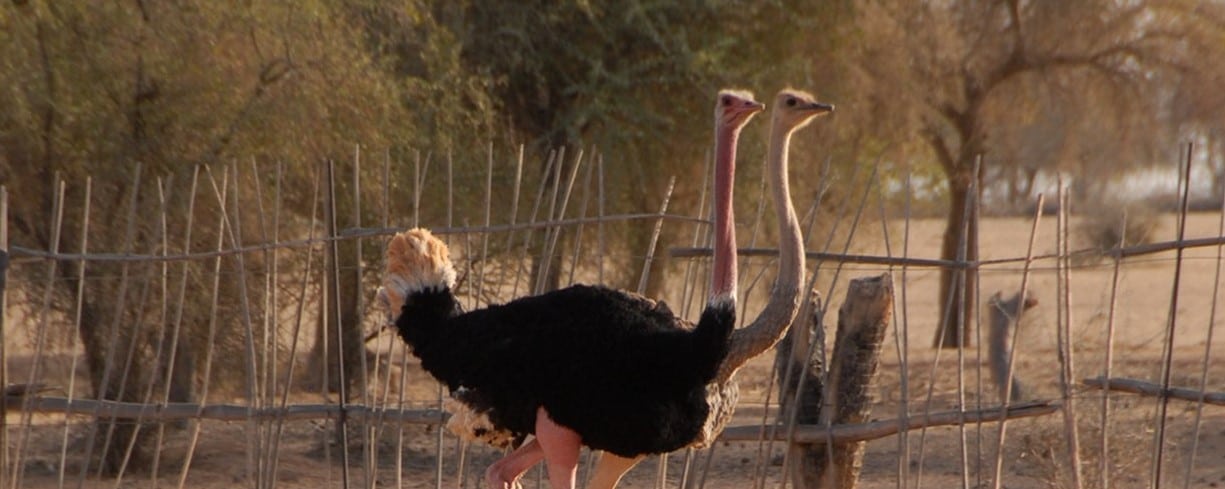
Originally a stronghold for Sahelo-Saharan wildlife, particularly the Red-necked Ostrich, the Kellé area has experienced significant human pressure over the past thirty years, notably seeing the agricultural frontier expand northward. The droughts of the 1970s-80s, combined with human pressure and, above all, excessive hunting, have decimated wildlife that was once abundant in the area within the last century. As a result, the Red-necked Ostrich is now on the brink of extinction, with only a single wild male recorded in Niger.
The CERNK cooperative has contributed significantly, since its founding in 1998, to restoring the natural environment and conserving soils. Since 1999, it has run an ostrich breeding farm, covering 150 hectares at the foot of the Koutous hills. Between 1999 and 2001, the farm acquired Red-necked Ostriches from Chad and Cameroon, and Black-necked Ostriches from France. The farm currently holds 17 ostriches, 10 males and 7 females.
The Sahara Conservation Fund is a partner in the project for the technical implementation of the breeding and veterinary care component for the ostriches. The two organisations have been collaborating on the Red-necked Ostrich since 2007, with SCF mainly contributing feed provisions and care-related advice.
The project’s objective is to create optimal conditions for the captive breeding of Red-necked Ostriches at the Koutous farm, with a view to reintroducing them into their natural habitat within 4 to 5 years.