The Bolobo territory (345,000 ha) in the Democratic Republic of Congo (DRC) lies between the Congo River and the Kasaï River, in Bandundu province, Plateaux district, 300 km north of Kinshasa (a 1-hour flight).
Mbou Mon Tour (MMT) is a Congolese association established in 1997, operating in the Bolobo area and its surroundings (the territories of Kutu, Mushie, Yumbi and Inongo). It has collaborated with WWF on some of its activities since WWF began working in the area in 2005. WWF, initially based at MMT’s pilot farm (which also serves as its headquarters), has since established its own facilities 16 km away, to continue bonobo research.
When MMT requested the creation of a Community Bonobo Reserve on behalf of local communities, the Congolese Institute for Nature Conservation (ICCN) tasked WWF with providing data on biological resource inventories and participatory zoning of the village lands within the area, as well as exploring the conservation potential of forests belonging to local communities. WWF and MMT are therefore working together on establishing this reserve. To bring the process to completion, MMT will mainly handle awareness-raising and administrative procedures with the relevant authorities.
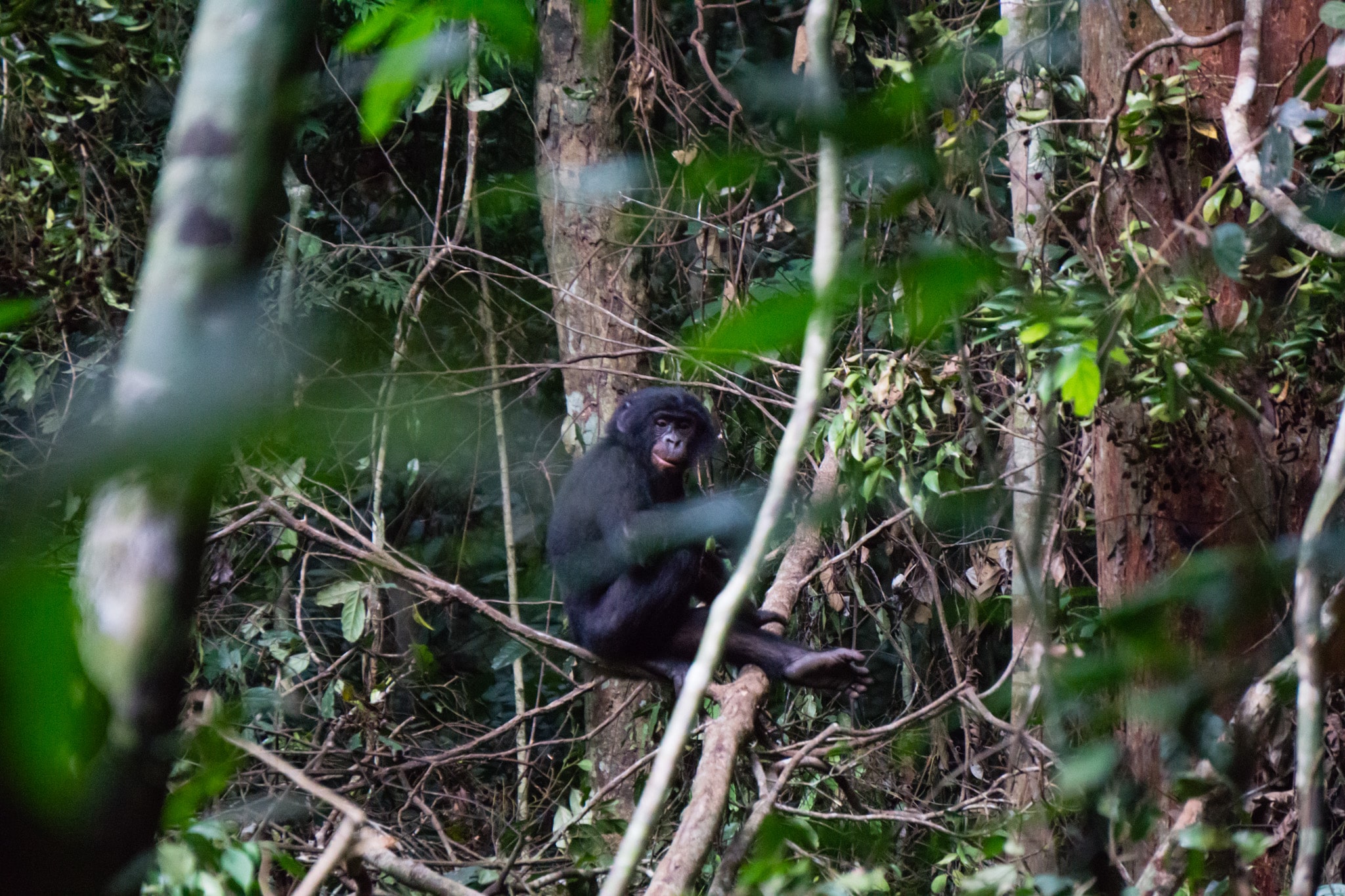
Bolobo offers rich and varied wildlife, notably one of the country’s highest densities of bonobos (Pan paniscus, a species classified as threatened on the IUCN Red List) — 2.1 individuals/km², according to a study carried out by WWF in 2008. Unlike the species’ typical preference for swamp forests, this population displays a very distinctive ecology, living both in forest ecosystems and in savanna.
These ecosystems — bonobo habitats — are rapidly disappearing due to the influx of non-native populations coming to the region to work for logging companies and engage in intensive livestock farming. These migrants also consume bushmeat and hunt protected species such as the bonobo, both for personal consumption and for meat sales.
In response to these threats, communities from 9 villages have decided to protect their forests by establishing an 84,735-ha community reserve, within which research and ecotourism activities will be developed, in a region that has never experienced armed conflict and is relatively close to Kinshasa and Brazzaville (a 1-hour flight by small plane). MMT and WWF are currently in talks with a tour operator to organise a circuit within the future reserve.
The project’s direct beneficiaries are farmers, herders and traditional chiefs, estimated at around 15,000 people. Indirect beneficiaries are tourists, public administration and tour operators, estimated at around 2,000 people.