


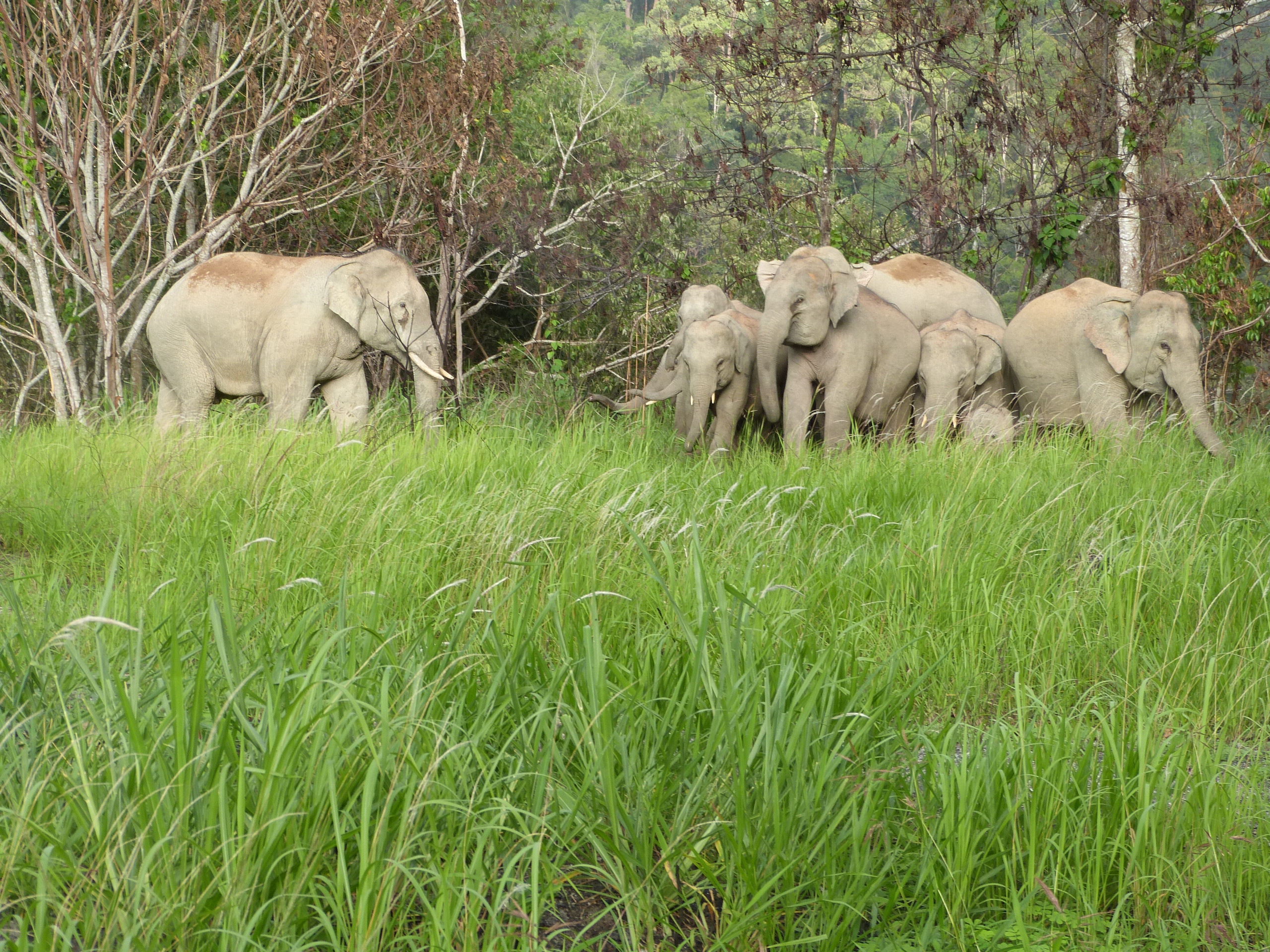
Landlocked within the Indochinese peninsula, the Lao People’s Democratic Republic is a small mountainous country covering 236,800 km², with a population of 5.3 million, 85% of whom live in rural areas. With forest cover spanning nearly 40% of its territory, Laos is the only country in the peninsula still home to viable populations of both wild and domestic elephants. Yet Laos, once known as the “Land of a Million Elephants”, is now home to just 2,000 elephants. As elsewhere in Asia, Laos’s wild elephants are threatened by the degradation of their traditional habitat (intensive logging, farmland expansion). Deprived of food, elephants are pushed towards cultivated areas. Human-elephant conflicts are increasing alarmingly, causing crop losses, property damage, and sometimes the death of villagers. Elephants considered uncontrollable are then hunted, others are poached for their ivory, or exported alive despite elephants being listed under CITES Appendix I. In addition, the use of domestic elephants represents a significant source of income for many families. Their traditional employment at village level is being replaced by more intensive use in large logging operations, often far from their mahouts’ homes. Traditional knowledge is gradually disappearing, without being replaced by modern veterinary techniques. The status of mahout has become devalued, weakening the socio-economic situation of families whose income depends on the work of domestic elephants.
The awareness-raising campaign carried out by ElefantAsia in 2002 demonstrated the Laotian people’s strong attachment to the elephant, a national symbol that most had nevertheless never actually seen. The mahouts of Hongsa, 8 representatives of whom took part in this caravan, also expressed their wish to restore the standing of their profession, gain access to appropriate veterinary care, and develop new economic activities.
The programme’s overall objective is to develop the conditions for sustainable coexistence between humans and Asian elephants, by offering Laotian populations alternative solutions to enhance the value of this threatened natural and cultural heritage.