- Local development
- Beneficiary ACFCam - Association des Communes Forestières du Cameroun
- Montant du projet € 64 862
- Subventions FFEM € 32 300
-
État du projet achevé
Since 2005, the Association des Communes Forestières du Cameroun (ACFCam), bringing together forest-managing communes from eastern, central and southern Cameroon, has been working on the official classification of communal forests, the implementation of forest management plans, and the valorisation of timber and non-timber forest products (NTFPs), through a technical body known as the Communal Forest Technical Centre (CTFC).
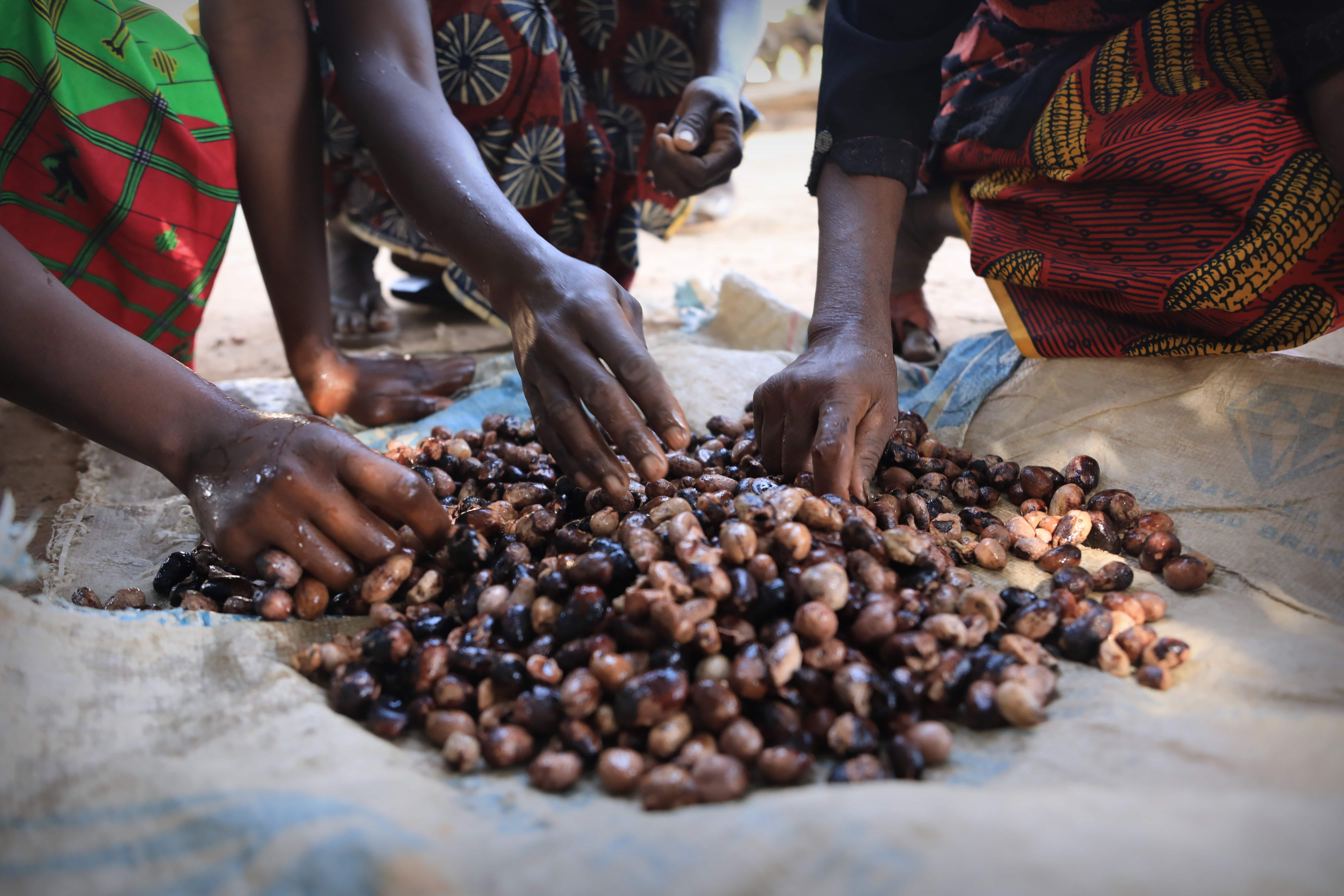
As part of the Cameroon Communal Forest Support Programme (PAF2C), the CTFC, beyond its support to communes in managing their forests, wants to place particular emphasis on enhancing the value of NTFPs (Djansang, wild mango, jujube, pepper, Moabi seeds and oil), currently exploited in a traditional and informal manner, which makes it difficult to reach local or export markets. As obtaining an NTFP exploitation permit remains administratively burdensome, the general trend is to remain in an informal, unregulated situation.
The project will involve legalising the exploitation and improving the marketing of NTFPs across 9 production basins, corresponding to 9 communes in Cameroon’s Eastern, Centre and Southern regions. In addition, in the Eastern region, ACFCam created a Market Information System (SIM) in 2009, connecting stakeholders across NTFP value chains and facilitating product marketing by centralising information on supply and demand (products, quantities, prices, location); this SIM will be expanded thanks to the project.
The project will directly benefit around 2,250 people.
The resulting structuring of NTFP value chains will help improve fruit and seed collection and preservation methods, moving away from techniques that are not always conducive to maintaining forest biodiversity. Income generated from marketing these products will benefit local populations.
This project aims to promote the valorisation of non-timber forest products as a means of maintaining biodiversity within our forest ecosystem (environmental protection) and achieving sustainable local development (poverty reduction).