


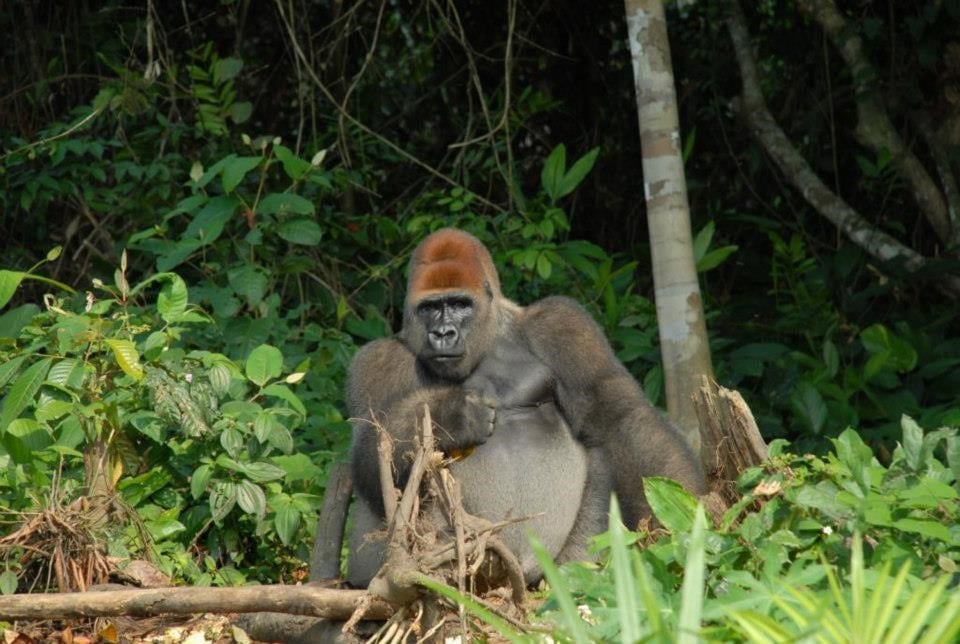
Our partners unite their voices for great ape conservation
Publié le 5 October 2026From 8 to 11 September 2026, Yaoundé hosted the 4th Congress of the African Primatological Society (APS), on the theme “Ethical Primatology: Recognising the Role of Communities and Indigenous Peoples in African Primate Conservation”.
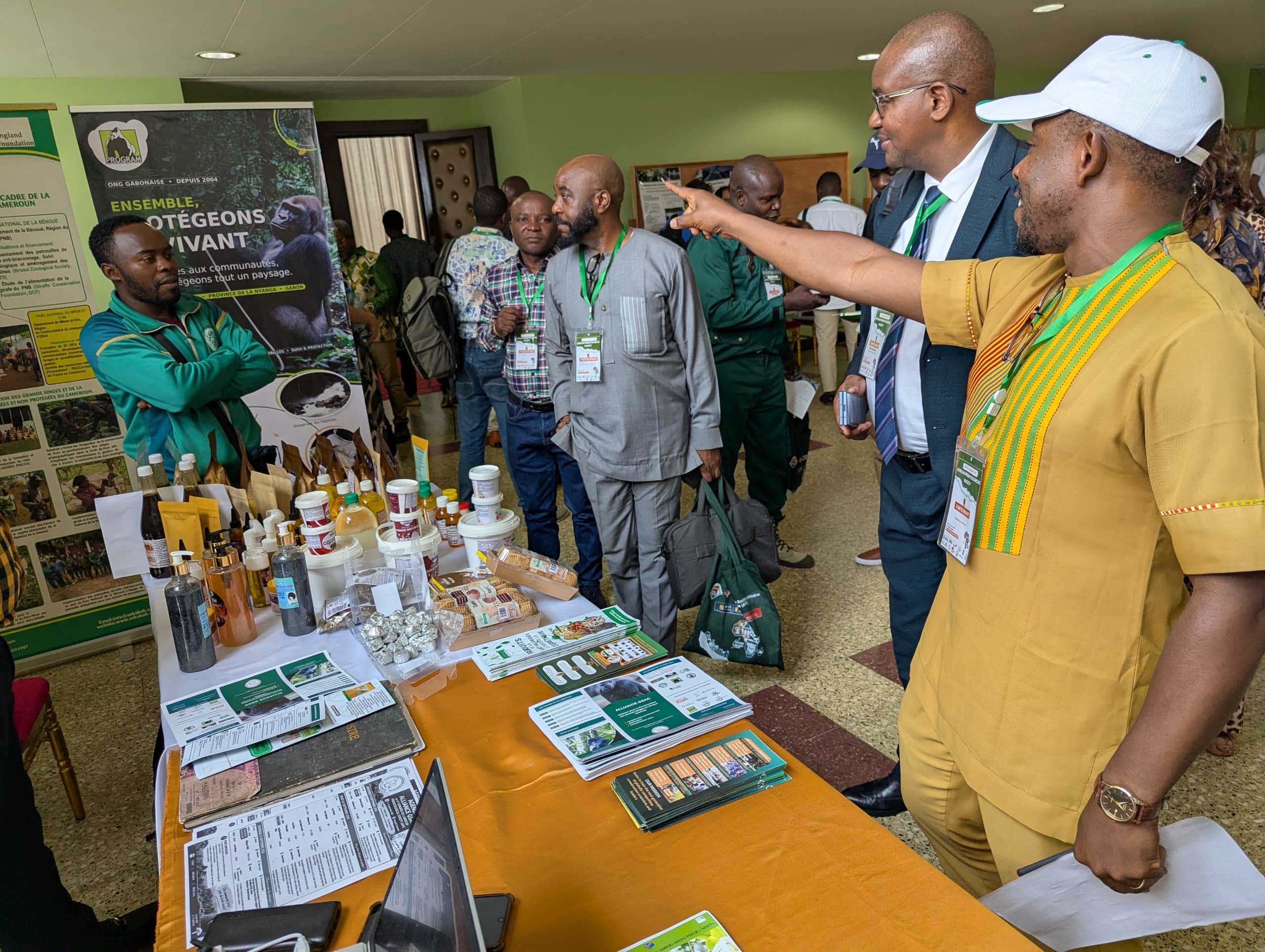
Among the participants, seven organisations were gathered under a single banner: the GSAC Alliance (Alliance for the Conservation of Great Apes in Central Africa), a network supported by the PPI since its creation. All of them also supported by the PPI, through current or past partnerships, they are active in four Congo Basin countries — ERuDeF, Sekakoh and TF-RD in Cameroon, PROGRAM in Gabon, ESI Congo in the Republic of Congo, and FODI and Mbou-Mon-Tour in the DRC — and together cover the protection of the continent’s four great ape species: western lowland gorilla (Gorilla gorilla gorilla, CR), Grauer’s gorilla (Gorilla beringei graueri, CR), common chimpanzee (Pan troglodytes, EN), Nigeria-Cameroon chimpanzee (Pan troglodytes ellioti, EN) and bonobo (Pan paniscus, EN). Six of the seven members gave a scientific presentation, for a total of 13 contributions, in addition to a joint stand.
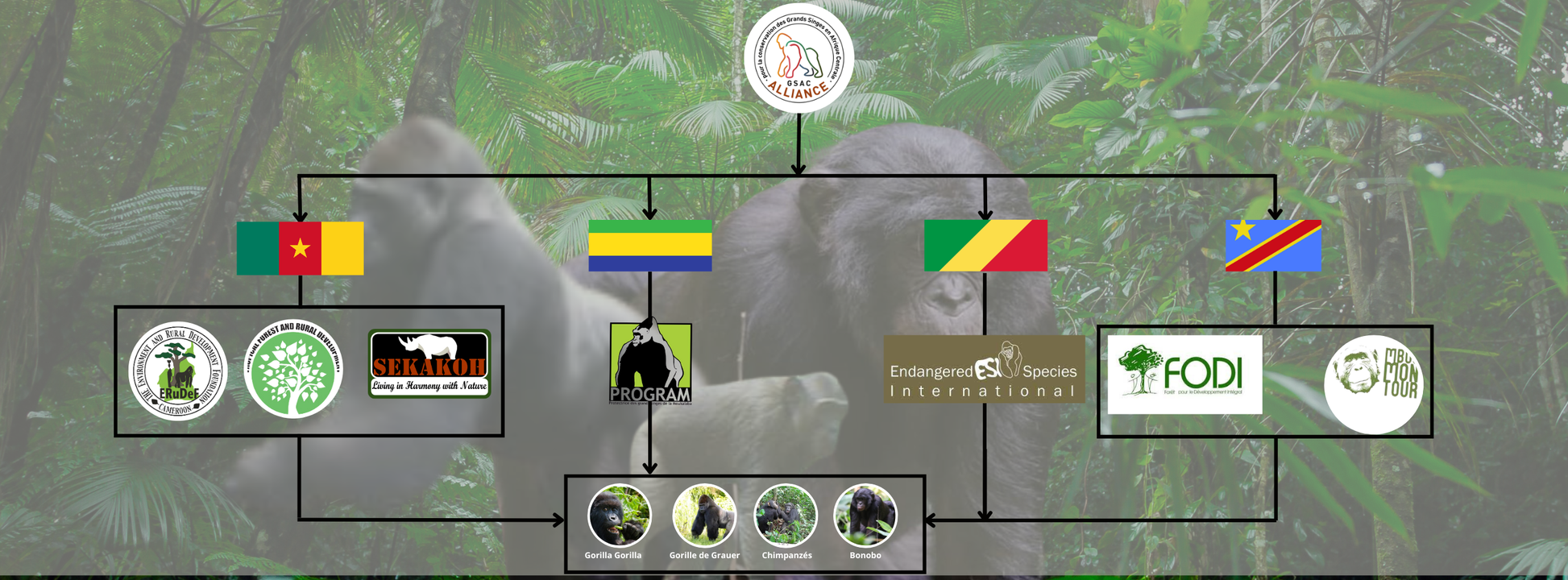 Cover photo of the GSAC Alliance Facebook page
A network speaking with one voice
Over four days, the Alliance’s members presented their fieldwork, with a common thread running through it all: great ape conservation cannot be conceived without local communities. Ecological corridors, coexistence with farming and livestock, environmental education, the link between conservation and ecotourism, and more.


The Congress opened with the keynote by Dr Manfred Epanda (TF-RD), on the lessons of community dialogue for ethical conservation in Cameroon. The Gabonese NGO PROGRAM, for its part, presented twenty years of conservation in Moukalaba-Doudou, told through the evolution of the tracker’s role into that of a full community stakeholder.
According to Romida, communications officer of the GSAC Alliance, the atmosphere on site lived up to the event: a large turnout of researchers and conservation professionals, continuous exchanges at the stands, and an audience engaged in the debates.
Ekwoge Abwe, the new president of the APS and director of the Cameroon Biodiversity Association (CamBio), organiser of the Congress, sums up the spirit of this edition:
« The 4th African Primatological Society Congress demonstrated that effective primate conservation must be both science-driven and people-centred. By bringing Indigenous and local communities, protected-area practitioners, civil society, researchers and donors to the same table, the Congress strengthened a shared commitment to turning scientific evidence into conservation action that is locally relevant, inclusive and sustainable across Africa. »
A view shared by Matthew Lewis, Great Apes and Gibbons Program Officer at the Arcus Foundation:
« CamBio and partners did a tremendous job welcoming participants from across Africa and beyond to Yaoundé for the 4th African Primatological Society Congress. Particularly impressive was the strong emphasis on IPLC participation, with representation at the Congress itself sparking rich exchange between village chiefs, conservators from Cameroon’s Ministry of Forestry and Wildlife (MINFOF), researchers, and African CSOs — a real model for and encapsulating what is needed to reconcile conservation with human wellbeing. »
A roundtable to close the congress
Beyond the individual presentations, the Alliance’s members also held a joint roundtable on 11 September, dedicated to more than three decades of community-based great ape conservation in Central Africa. As Roméo Fopa of the GSAC Alliance explains, the aim was not to run through “success stories”, but to confront the results of their socio-ecological study, the field experience of the member organisations, and the real voices of the beneficiaries of their programmes.
Several key questions emerged: how can genuine trust be built with communities? How can we move from mere participation to real local decision-making power? How should coexistence be managed when it is communities that directly bear the costs of living alongside great apes?
One of the Alliance study’s most striking findings: improving livelihoods is not, in itself, enough to reduce pressure on natural resources. It is first necessary to understand the specific drivers of that pressure in each territory, and to design economic interventions around those drivers rather than applying a one-size-fits-all model — the realities of Cameroon, the DRC, Congo and Gabon remaining, on this point, very different.

About PPI’s support, Roméo Fopa highlights long-term accompaniment, both in structuring the network and in developing the organisations that make it up — support that has enabled, in his view, a notable shift: these local organisations no longer simply present their fieldwork; they now produce their own data and contribute directly to scientific debates on conservation.
If this Congress had to be summed up in a single idea, it would be this, according to Roméo:
“we are gradually moving from community conservation where communities are asked to take part in our projects, towards a conservation where local actors should have greater power in the design, decision-making, implementation and evaluation of conservation actions.”