


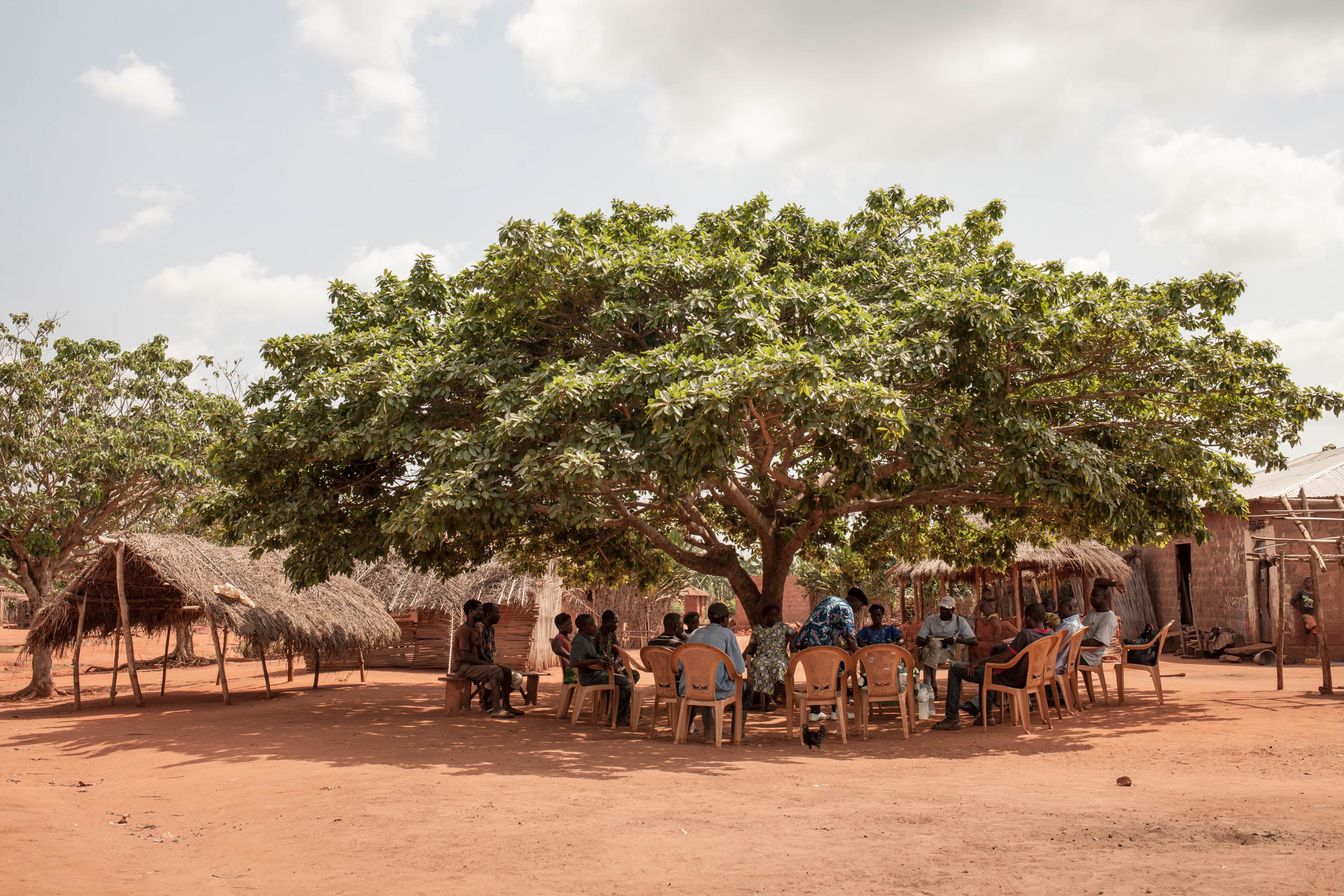
COMAID supports local and indigenous communities to protect and sustainably manage their lands and natural resources and build economic and climate resilience to attain self-sufficiency through research, capacity building, technical support, and advocacy using inclusive, gender-responsive and participatory approaches.
Mission
Actions
-
improve land security and rights of at least 20 communities through land-use planning, legal empowerment and geospatial technology
-
ensure sustainable ecosystem management, landscape restoration and climate adaptation through community-based models
-
promote sustainable food systems and agribusinesses in 10 communities
-
enhance self-governance and revive indigenous knowledge in at least 5 communities
-
strengthen COMAID’s own institutional capacity
History
From the mist-covered Bamenda Highlands to the rain-rich Ebo Forest, Cameroon’s communities once lived in close relationship with the land, caring for rivers, forests and wildlife as kin under earth-centred customary laws.
Colonialism, industrialisation and conflict have since cleared forests and grabbed land, excluding frontline communities from decisions amid accelerating deforestation in the Congo Basin. Community Assistance in Development (COMAID) was formed in 2007 by civil society leaders sharing a vision to stand with communities in restoring nature and culture for resilience – not imposing change, but helping communities act on their own sophisticated knowledge systems.
From the start, COMAID has worked as an equal partner, combining ancestral wisdom with practical tools through participatory mapping, legal innovation and elder-centred dialogue to resolve disputes, defend land rights, replant forests and conserve biodiversity.
About

COMAID - Community Assistance In Development
Cameroun
Nkwen Bamenda