


- Biodiversity assessment and monitoring
- Beneficiary Noé
- Montant du projet € 50 500
- Subventions FFEM € 20 000
-
État du projet achevé
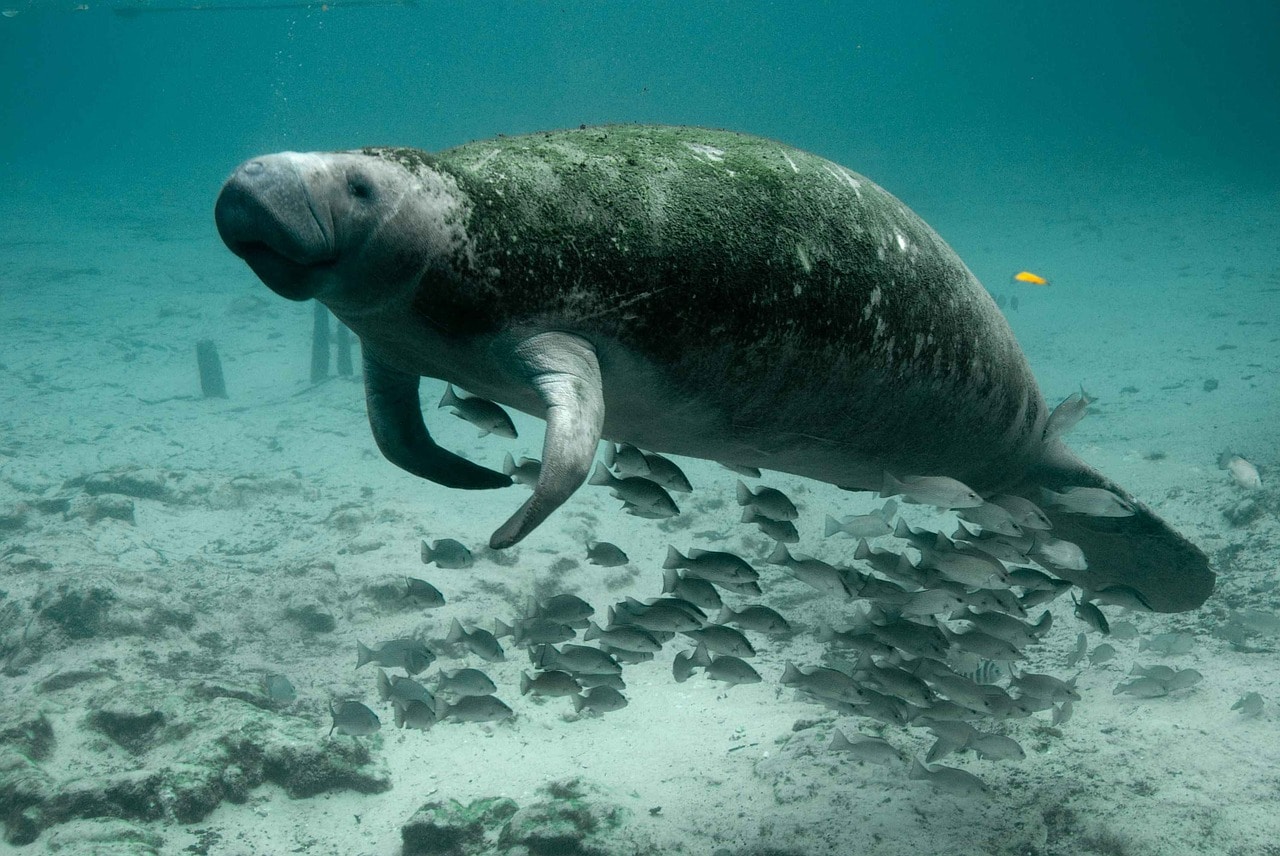
Manatees are known to exploit a wide variety of habitats: coastal waters, estuaries, rivers and lagoons; and can travel relatively long distances to reach their feeding grounds.
While Antillean manatee populations are relatively well studied, current knowledge of the numbers, structure and status of African populations is much more limited, owing to the scarcity of animal sightings in this region, linked to the very nature of their habitat and its turbidity. This lack of knowledge limits the implementation of conservation actions for the species and the environments it frequents.
At the end of December, a group of manatees trapped by the falling water level of the Senegal River in the Matam region (Ferlo, north-eastern Senegal) was observed by the team from the NGO “Océanium”. The area’s climatic patterns suggest that the manatees would not be able to survive until the return of the next rainy season (late June – early July). Their rescue therefore had to be considered. The capture of these individuals represents a unique opportunity to establish scientific monitoring of this group of manatees, thereby strengthening knowledge and conservation efforts for the species.
The objectives are to save this group of manatees; to assess the physiological and health status of each individual (sex, size, mass, reproductive status, nutritional condition, contamination by heavy metals, pesticides, etc.); to determine the genetic structure of this group of manatees in relation to that of populations in neighbouring countries; to study how the species uses space in a river context and draw from this the information needed to establish a protection plan for the area and the manatees; to develop, within the framework of the PRCM and in collaboration with Wetlands International, a favourable framework for manatee conservation in areas identified as priorities, working closely with local populations; and finally, to raise awareness among local populations and the general public about the conservation of this species and other aquatic species.
The information gathered should help to better define the actions needed to preserve the last West African manatee populations, a particularly vulnerable species.